59 books available
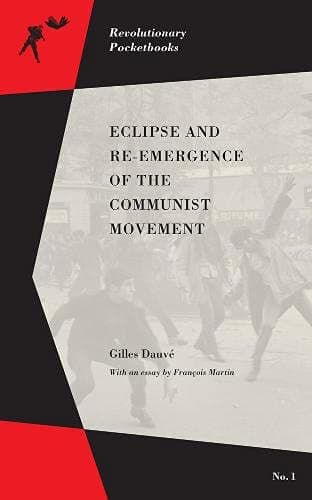
Gilles Dauvé & Francois Martin
In the years following 1968, a number of people involved in the most radical aspects of the French general strike felt the need to reflect on their experiences and to relate them to past revolutionary endeavors. This meant studying previous attempts and theories, namely those of the post-1917 German-Dutch and Italian Communist Left. The original essays included here were first written between 1969 and 1972 and circulated amongst left communist and worker circles. But France was not the only country where radicals sought to contextualize their political environment and analyze their own radical pasts. Over the years these three essays have been published separately in various languages and printed as books in both the United States and the UK with few changes. This third English edition is updated to take into account the contemporary political situation; half of the present volume is new material. The book argues that doing away with wage-labor, class, the State, and private property is necessary, possible, and can only be achieved by a historical break, one that would certainly differ from October 1917… yet it would not be a peaceful, gradual, piecemeal evolution either. Like their historical predecessors—Marx, Rosa Luxemburg, Anton Pannekoek, Amadeo Bordiga, Durruti, and Debord—the authors maintain a belief in revolution.
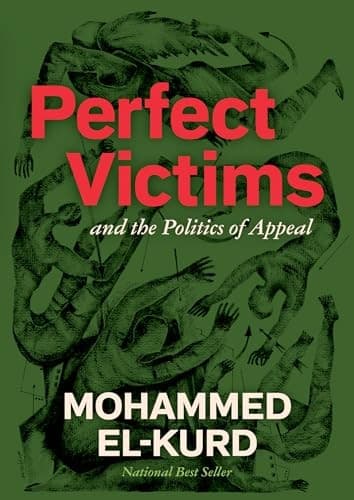
Mohammed El-Kurd
NEW YORK TIMES BESTSELLER "Mohammed El-Kurd has written a new Discourse on Colonialism for the twenty-first century." --Robin D. G. Kelley Perfect Victims is an urgent affirmation of the Palestinian condition of resistance and refusal―an ode to the steadfastness of a nation. Palestine is a microcosm of the world: on fire, stubborn, fragmented, dignified. While a settler colonial state continues to inflict devastating violence, fundamental truths are deliberately obscured--the perpetrators are coddled while the victims are blamed and placed on trial. Why must Palestinians prove their humanity? And what are the implications of such an infuriatingly impossible task? With fearless prose and lyrical precision, Mohammed El-Kurd refuses a life spent in cross-examination. Rather than asking the oppressed to perform a perfect victimhood, El-Kurd asks friends and foes alike to look Palestinians in the eye, forgoing both deference and condemnation. How we see Palestine reveals how we see each other; how we see everything else. Masterfully combining candid testimony, history, and reportage, Perfect Victims presents a powerfully simple demand: dignity for the Palestinian.
Raya Dunayevskaya
Shane Burley
A detailed map of the far right and a game plan for building the mass movements that will stop it
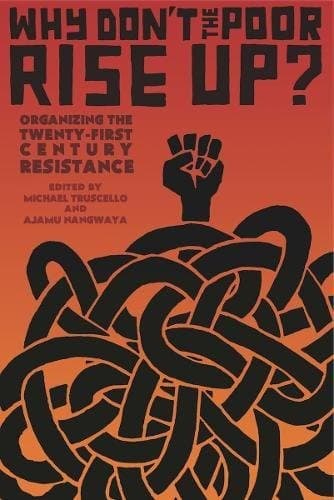
Michael Truscello & Ajamu Nangwaya
Poverty is on the rise, especially since the 2008 economic meltdown. Riots and urban insurrections are also on the rise, and are becoming increasingly confrontational and intense. Why Don't the Poor Rise Up? asks why the former hasn't led to more of the latter, and discusses how that can - and is likely to - change within the coming years. It is a vibrant collection of essays about the ways in which the poor are defined, the ways they resist, and the obstacles to that resistance both expanding and succeeding.
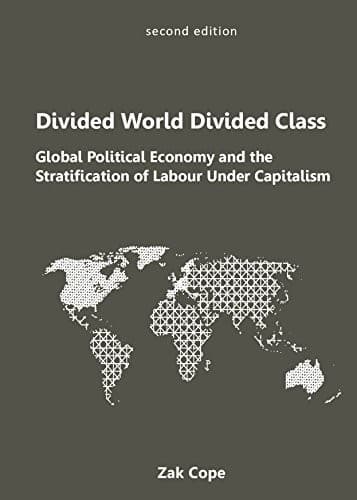
Zak Cope
Divided World Divided Class charts the history of the 'labour aristocracy' in the capitalist world system, from its roots in colonialism to its birth and eventual maturation into a full-fledged middle class in the age of imperialism. It argues that pervasive national, racial and cultural chauvinism in the core capitalist countries is not primarily attributable to 'false class consciousness', ideological indoctrination or ignorance as much left and liberal thinking assumes. Rather, these and related forms of bigotry are concentrated expressions of the major social strata of the core capitalist nations' shared economic interest in the exploitation and repression of dependent nations. The book demonstrates not only how redistribution of income derived from super-exploitation has allowed for the amelioration of class conflict in the wealthy capitalist countries, it also shows that the exorbitant 'super-wage' paid to workers there has meant the disappearance of a domestic vehicle for socialism, an exploited working class. Rather, in its place is a deeply conservative metropolitan workforce committed to maintaining, and even extending, its privileged position through imperialism. This second edition includes new material such as data on growing inequality between the richest and poorest countries; data illustrating rising real wages in Imperial Britain; explication of the concepts of value, monopoly capital and unequal exchange and their ramifications for the global class structure; discussion of social imperialism on the left; responses to critiques surrounding the thesis of mass embourgeoisement through imperialism; as well as further information on a range of subjects.
Noam Chomsky
A collection of extensive interviews with the world's greatest public intellectual on four years of an American nightmare.
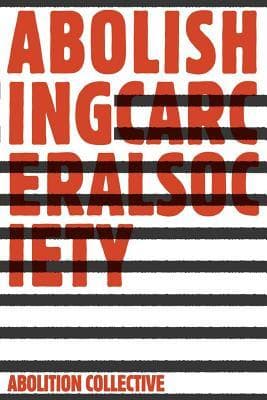
Abolition Collective
The bold voices and inspiring visions of today's revolutionary abolitionist movement--a creative range of approaches to dismantling interlocking institutions of oppression and transforming the world.
John Maclean
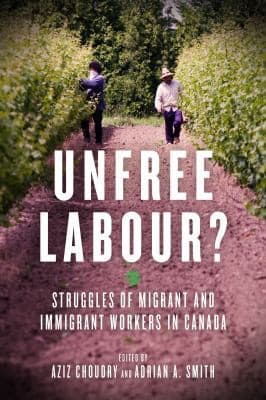
Aziz Choudry & Adrian A. Smith (eds)
Explores labour migration to Canada and how public policies of worker programs function in the context of work and capitalist restructuring. Over the past decade, Canada has experienced considerable growth in labour migration. Moreover, temporary labour migration has replaced permanent immigration as the primary means by which people enter Canada. This book explores labour migration to Canada and how public policies of temporary and guest worker programs function in the global context of work and capitalist restructuring.
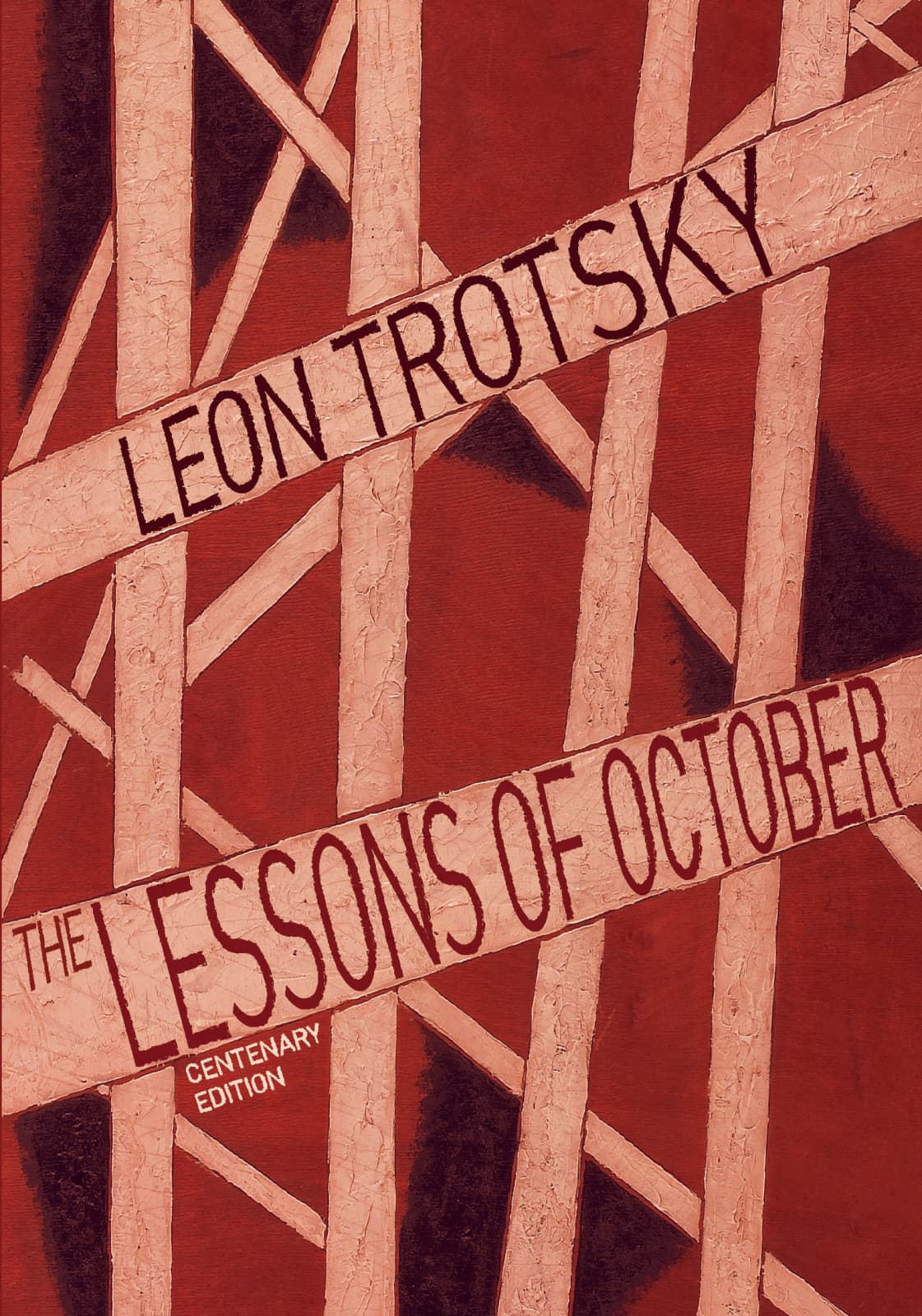
Leon Trotsky
An critical examination of the key actors and larger social movements that led to the rise of the Bolsheviks.
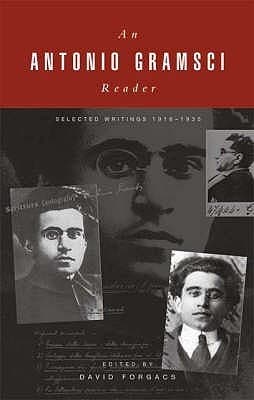
David Forgacs
This selection of Gramsci's writings includes his most important political, cultural and historical work. It focuses on key concepts - such as hegemony, passive revolution, civil society, common sense - and important texts on popular culture.
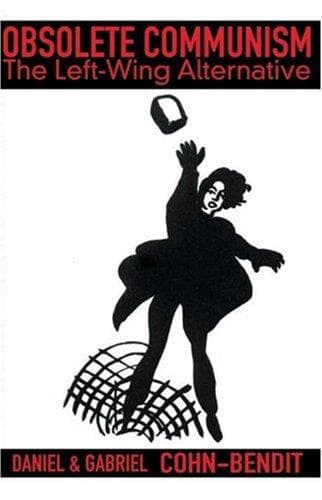
Daniel & Gabriel Cohn-Bendit
Daniel Cohn-Bendit - aka Danny the Red - led demonstrations at the Sorbonne in Nanterre which led to disciplinary action by the university and questioning by the local police. The immediate result of this heavy-handed discipline was a huge increase in the size of the French student movement and the outbreak of rioting which brought France to the edge of revolution in May '68. Cohn-Bendit's book brings first hand reporting from the front lines of that struggle and brings an intimacy not available in other accounts. Essential reading for revolutionaries.
Susan Buck-Morss
Susan Buck-Morss highlights new forms of international solidarity and revolutionary subjectivity that can break the impasse of neoliberal capitalism and reactionary nationalism.
Steve J. Shone
A convincing argument that the legacy of American Anarchism, far from being an antiquated relic, remains relevant to the present.
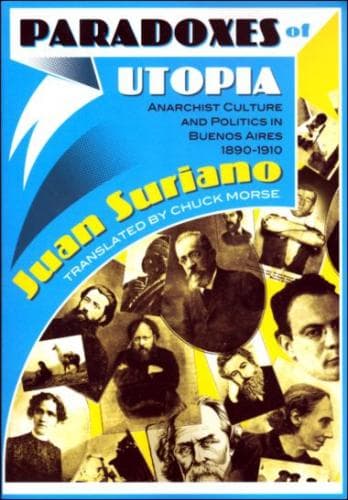
Juan Suriano. Chuck Morse (trans)
A social history of revolutionary ideas and lifestyles.
Cindy Milstein
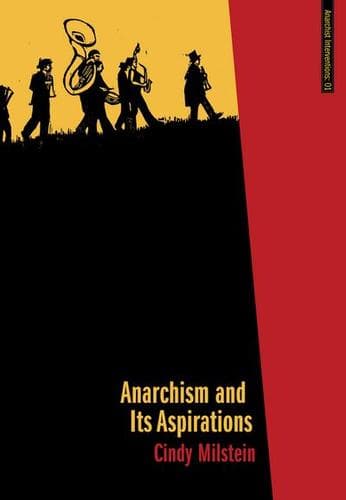
An accessible and thorough overview of anarchist figures and tendencies in the nineteenth and twentieth centuries.
Peter Kropotkin
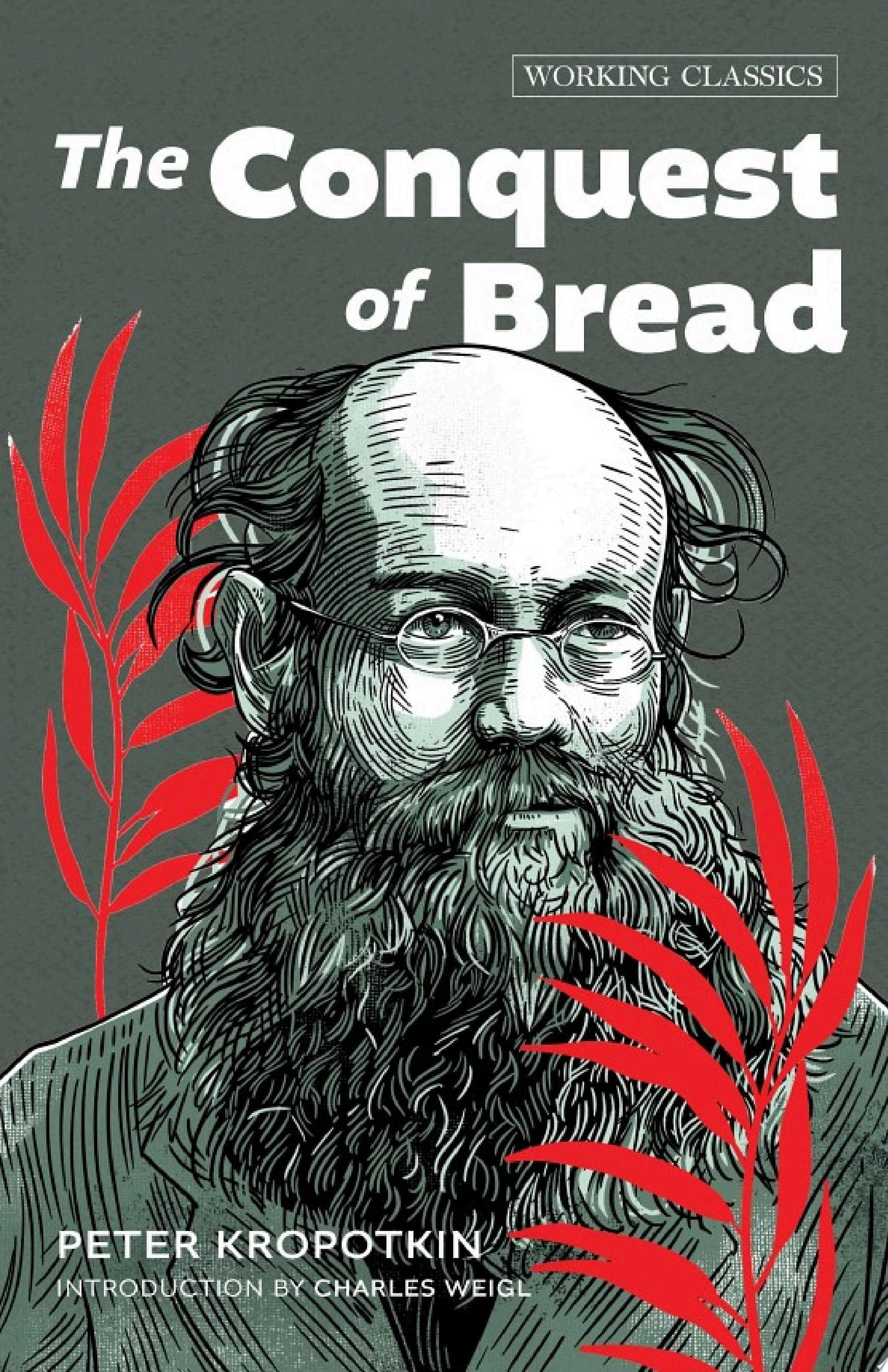
A brilliant blueprint for a free society by one of anarchism's most famous theorists. The Conquest of Bread is Peter Kropotkin’s most extensive study of human needs and his outline of the most rational and equitable means of satisfying them. The most important and widely read exposition of anarchist economic theory, its combination of detailed historical analysis and far-reaching utopian vision is a step-by-step guide to social revolution: the concrete means of achieving it and the new world that humanity is capable of creating. Writing in a way that he describes as "moderate in style, but revolutionary in substance," Kropotkin adeptly translates complex ideas into common language, while rendering the often-amorphous aspirations of social movements into coherent form. Includes an introduction that historically situates and discusses the contemporary relevance of Kropotkin’s ideas. The Working Classics Series revives lineages of radical thought from the history of the anarchist movement.
Anthony Ince & Gerónimo Barrera de la Torre
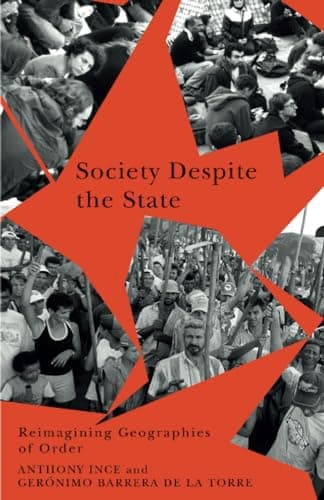
The logic of the state has come to define social and spatial relations, embedding itself into our understanding of the world and our place in it. Anthony Ince and Gerónimo Barrera de la Torre challenge this logic as the central pivot around which knowledge and life orbit, by exposing its vulnerabilities, contradictions, and, crucially, alternatives. Society Despite the State disrupts the dominance of state-centric modes of thinking by presenting a radical political geography framework inspired by anarchist thought and practice. The book also draws on a broad range of voices that hold affinities with Western anarchism but also exceed it. The book challenges radical scholars to confront and understand the state through a gaze and set of intellectual tools that the authors have termed 'post-statism'. In de-centering the state's operational logics and rationalities, the authors incorporate a variety of threads to build a picture of an alternative way of understanding and challenging statism's effects on our spatial and political imaginations.
Martin Howard
A handy, pocket-size compendium of the now infamous anarcho-quizzes that ran, first in the pages ofBlack Flag, under the authorship of the legendary Albert Meltzer. 350 questions (plus answers, in the back!), running the gamut from “In which city was the first anarcha-feminist paper published?” to “In 1840, the Russian government provoked riots by ordering peasants to grow what?” to “Which murdering fascist did Italy commemorate in 2005 with a postage stamp?” to the ever popular trivia gem “What inspired Sylvia Pankhurst to help open a jam factory?” Agitate, educate, and organize! All in a handy quiz format!
George Katsiaficas
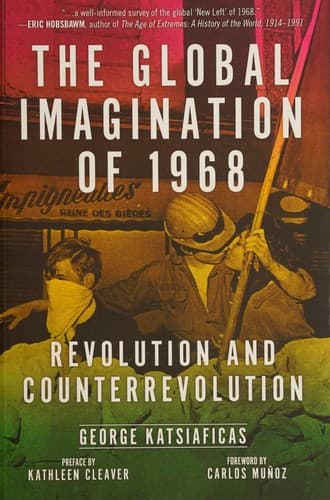
With discussions of more than 50 countries, Katsiaficas articulates an understanding of the 1960s' social struggles not bound by national or continental divides nor focused on famous individuals. From the Prague revolt against Soviet communism to the French May uprising, the Vietnam Tet offensive, African anticolonial insurgencies, the civil rights movement, and campus eruptions in Latin America, Yugoslavia, and the United States, this book portrays the movements of the '60s as intuitively tied together. Student movements challenged authorities in almost every country, giving the insurgency a global character. As uprisings occur with increasing frequency in the 21st century, the lessons of 1968 provide useful insights for future struggles.
Camilla Fitzsimons & Sinéad Kennedy
A celebration and analysis of a 35-year long grassroots movement that successfully overturned the ban on abortion in Ireland
Antony Loewenstein
How Israel makes a killing from the occupation of Palestine **WINNER OF THE 2023 WALKLEY NON FICTION JOURNALISM PRIZE** **Finalist for the 2023 Moore Prize for Human Rights Writing** Israel’s military industrial complex uses the occupied, Palestinian territories as a testing ground for weaponry and surveillance technology that they then export around the world to despots and democracies. For more than 50 years, occupation of the West Bank and Gaza has given the Israeli state invaluable experience in controlling an “enemy” population, the Palestinians. It’s here that they have perfected the architecture of control. Best-selling journalist Antony Loewenstein, author of Disaster Capitalism, uncovers this largely hidden world in a global investigation with secret documents, revealing interviews and on-the-ground reporting. This book shows in-depth, for the first time, how Palestine has become the perfect laboratory for the Israeli military-techno complex: surveillance, home demolitions, indefinite incarceration and brutality to the hi-tech tools that drive the 'Start-up Nation'. From the Pegasus software that hacked Jeff Bezos' and Jamal Khashoggi’s phones, the weapons sold to the Myanmar army that has murdered thousands of Rohingyas and drones used by the European Union to monitor refugees in the Mediterranean who are left to drown. Israel has become a global leader in spying technology and defence hardware that fuels the globe’s most brutal conflicts. As ethno-nationalism grows in the 21st century, Israel has built the ultimate model.
Didier Fassin
Western governments and elites have supported the destruction of Gaza, silencing the Palestinians and those who speak on their behalf. Providing a record of the first six months of the war waged by the Israeli army after the 7 October attacks and drawing on a rich range of international sources, Didier Fassin examines how most Western governments have acquiesced in and often contributed to the destruction, by the Israeli army, of Gaza, its homes, infrastructures, hospitals, institutions of education, and civilian population. To justify their support and prevent criticism, they have provided an official version of the events, adopting the Israeli narrative. It was largely taken up by mainstream media, which ignored the experiences and perspectives of Palestinians. Dissenting voices were silenced. A policing of language and thought was imposed. Censorship and self-censorship became normalized. To call for a ceasefire or to demand the respect of humanitarian law was enough to prompt the ever-ready accusation of antisemitism. Exploring the multiple dimensions of the extreme inequality of lives between the two sides of the conflict and analyzing the complex geopolitical, economic and ideological stakes that underlie it, Fassin intends to constitute an archive of this moral abdication. In his view, the abandonment of the values and principles proclaimed by Western elites to be foundational will leave a deep scar in the history of the world.