59 books available
Jehad Abusalim, Jennifer Bing & Michael Merryman (eds)
Light in Gaza gathers a collective Palestinian vision of what a future Gaza could be.
Dilar Dirik
The Kurdish women's movement is at the heart of the most exciting revolutionary experiment in the world today: Rojava. Forged over decades of struggle, most recently in the fight against ISIS, Rojava embodies a radical commitment to ecology, democracy and gender equality. But while striking images of Kurdish women in desert fatigues proliferate, a true understanding of the women's movement remains elusive.Taking apart the superficial and Orientalist frameworks that dominate, Dilar Dirik offers instead an empirically rich account of the women's movement in Kurdistan. Drawing on original research and ethnographic fieldwork, she surveys the movement's historical origins, ideological evolution, and political practice over the past forty years. Going beyond abstract ideas, Dirik locates the movement's culture and ideology in its concrete work for women's liberation and radical democracy.Taking the reader from the guerrilla mountains to radical women's academies and self-organised refugee camps, the book invites women around the world to engage with the revolution in Kurdistan, both theoretically and practically, as a vital touchstone in the wider struggle for a militant anti-fascist, anti-capitalist feminist internationalism.
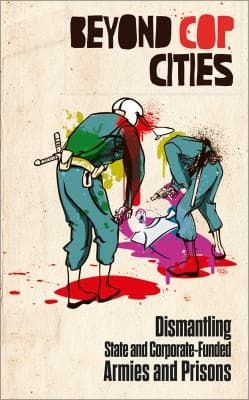
Alisa Bierria, Jakeya Caruthers & Brooke Lober (eds)
A collection of radical reconsiderations and creative critiques that aims to expose, disrupt, and uproot carcerality.
Michael Lowy
Praise for On Changing the World: "His collection of essays, combining scholarship with passion, impresses by its sweep and scope."—Daniel Singer Ecosocialists believe that the prevention of an unprecedented ecological catastrophe and the preservation of a natural environment favorable to human life are incompatible with the expansive and destructive logic of the capitalist system. The present collection of articles explores some of the main ecosocialist proposals and some concrete experiences of struggle, particularly in Latin America. Michael Löwy is emerit Research Director at the CNRS (National Center for Scientific Research). His books have been translated into twenty-nine languages.
Eleanor Finley
An eco-socialist's handbook on how to change the world
Lesley J. Wood
Crisis and Control explains how neoliberal shifts in political and economic systems are transforming the policing of protest, based on a compelling empirical study of police agencies and practices from 1995 until the present. Lesley J. Wood shows that the increasing role of the security and defense industries, professional police associations, anti-terrorism initiatives and the diffusion of 'best practices' amongst policing networks have accelerated the use of less lethal weapons, pre-emptive arrests and barricading strategies against protesters. Crisis and Control uses novel theoretical and methodological approaches and a unique range of empirical data to make an important and radical contribution to a growing field.
Isaiah Wilson
This book argues that a major reason for America's propensity to 'lose the peace' is the way the nation defines war and how the U.S. military is currently organized for warfare. The author offers new propositions and operational approaches to war-planning that give new hope and practical solutions to overcoming the paradox of American Way of War.
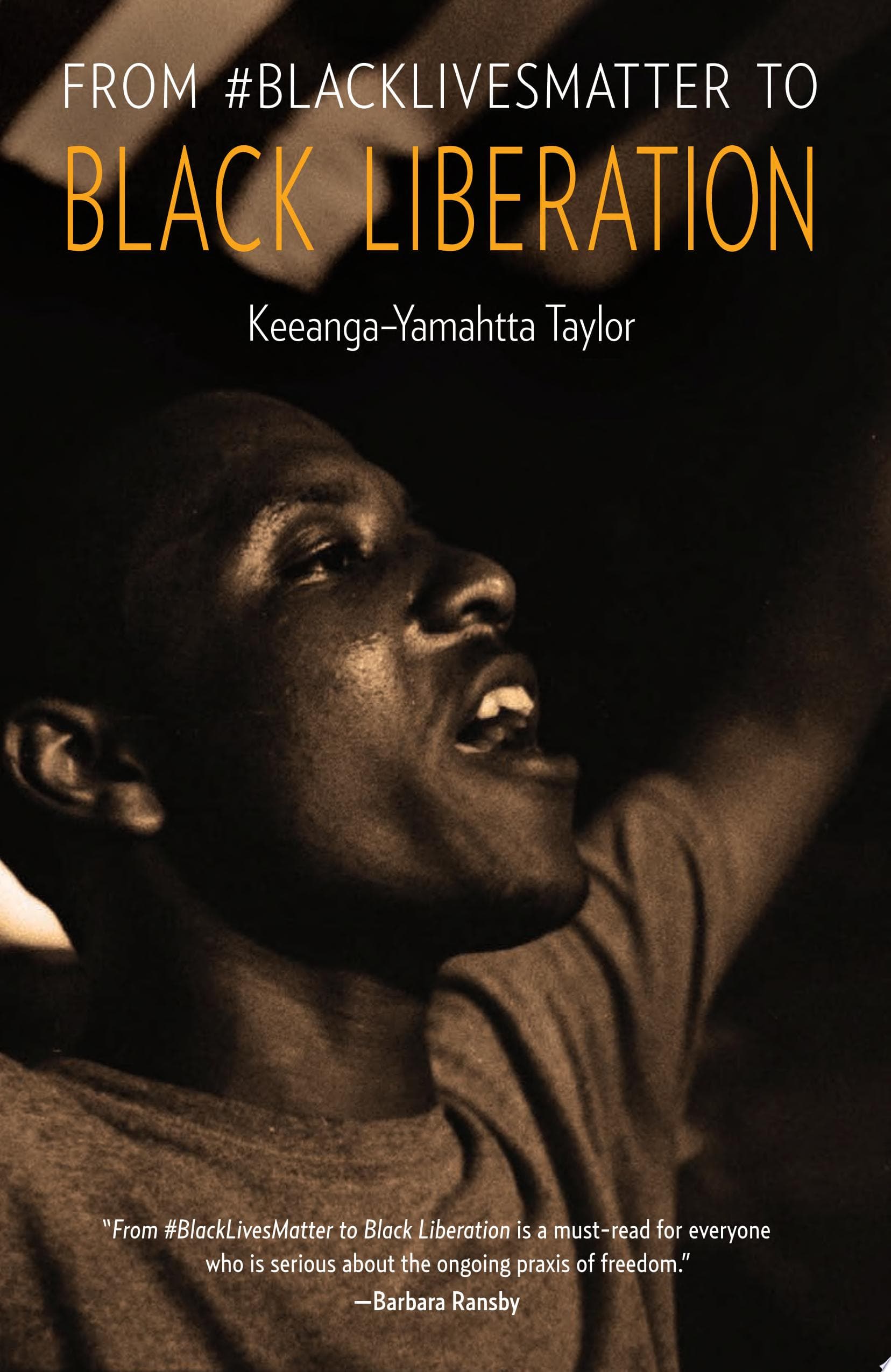
Keeanga-Yamahtta Taylor
An indispensable contribution to the movement for racial justice in postracial America."
William I. Robinson
These ten essays provide a comprehensive introduction and overview of the theory of global capitalism and its application to a wide range of contemporary issues that will be accessible to activists and the general public yet also satisfying for scholars.
Joy James (ed)
What happens when the police becomes an army?
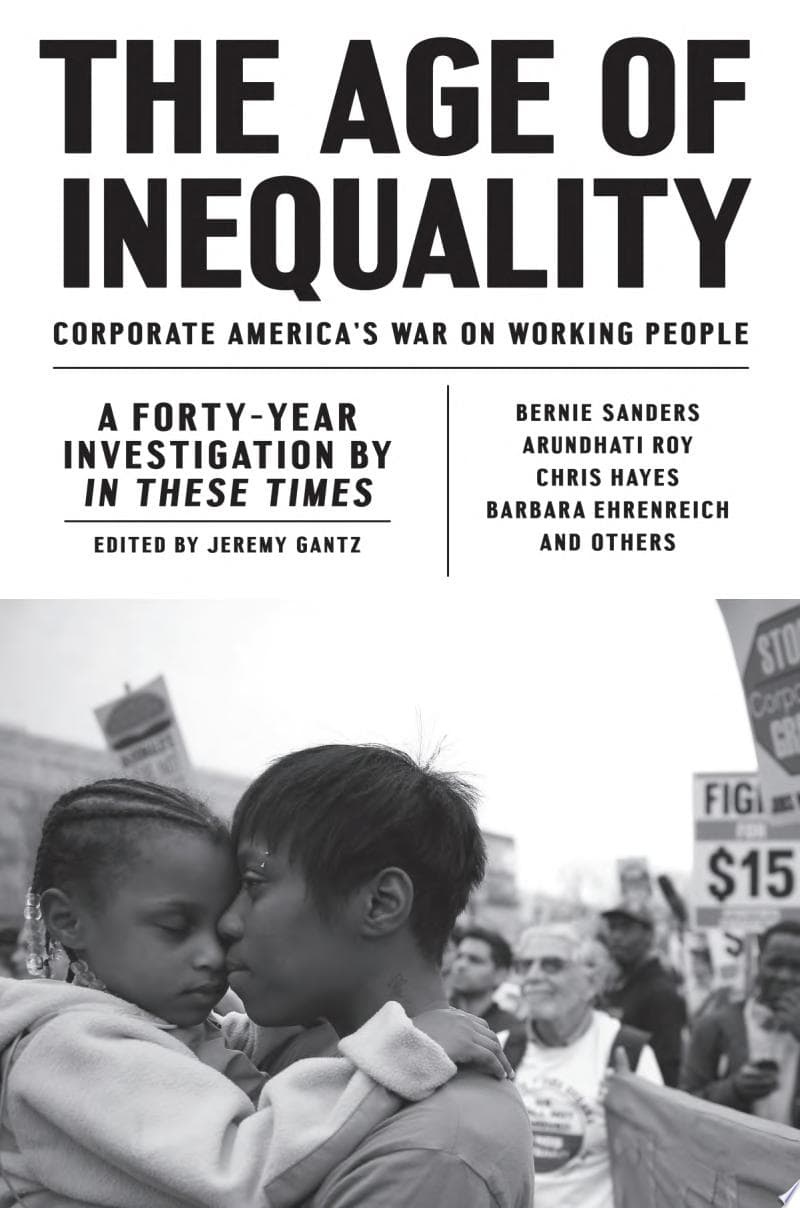
Jeremy Gantz (ed)
The stories behind the inequality crisis—a forty-year investigation by In These Times With heart-wrenching reporting and incisive analysis, In These Times magazine has charted a staggering rise in inequality and the fall of the American middle class. Here, in a selection from four decades of articles by investigative reporters and progressive thinkers, is the story of our age. It is a tale of shockingly successful corporate takeovers stretching from Reagan to Trump, but also of brave attempts to turn the tide, from the Seattle global justice protests to Occupy to the Fight for 15. Featuring contributions from Michelle Chen, Noam Chomsky, Tom Geoghegan, Juan González, David Moberg, Salim Muwakkil, Ralph Nader, Frances Fox Piven, Keeanga-Yamahtta Taylor, Slavoj Žižek, and many others, The Age of Inequality is the definitive account of a defining issue of our time.
Houria Bouteldja
Defeating the rise of the fascists will take an epic project of anticolonial unity
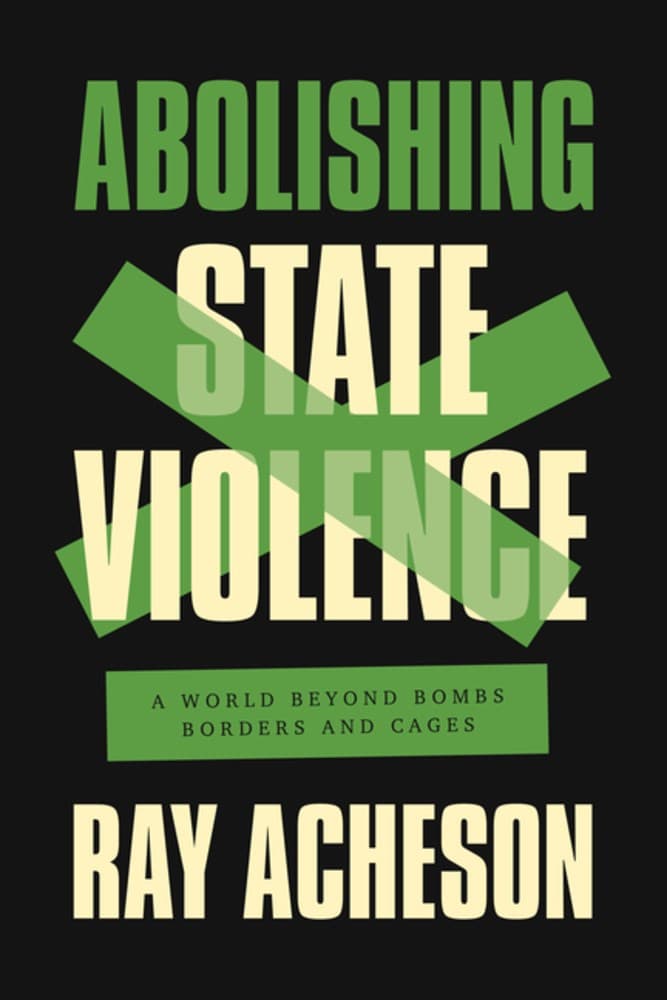
Ray Acheson
Abolishing State Violence calls for the abolition of structures of violence, including police, prisons, borders, war, nuclear weapons, surveillance, and capitalism.
John Womack Jr
What would it take to topple Amazon? To change how health care works in America? To break up the media monopolies that have taken hold of our information and imaginations? How is it possible to organize those without hope working on the margins? In Labor Power and Strategy, legendary strategist, historian and labor organizer John Womack, speaks directly to a new generation, providing rational, radical, experience-based perspectives that help target and run smart, strategic, effective campaigns in the working class. In this sleek, practical, pocket inspiration, Womack lays out a timely plan for identifying chokepoints and taking advantage of supply chain issues in order to seize and build labor power and solidarity. Interviewed by Peter Olney of the International Longshore and Warehouse Union--Womack's lively, illuminating thoughts are built upon by ten young labor organizers and educators, whose responses create a rich dialogue and open a space for joyful, achievable change. With stories of triumph that will bring readers to tears this back-pocket primer is an instant classic.
Sian Lazar
'A masterful book - a resource that makes anthropology matter' - Andrea Muehlebach, Professor of Anthropology, University of Bremen When it comes to labour movements, unionised industrial workers on the factory floor have only ever been part of the picture. Across so many different workplaces, sectors of the economy and geographical contexts, the question of how working people struggle in the day-to-day has no single answer. Here Sian Lazar offers a unique anthropological perspective on labour agency that takes in examples from across the globe, from heavy industry and agriculture, to the service and informal sectors. She asks: how do people strive to improve their lives and working conditions? How are they constrained and enabled in that struggle by the nature of the work they do, and by their own positionality in local histories, cultures and networks? How We Struggle explores worker action across the spectrum from organised trade unionism to individualised strategies of accommodation, resistance and escape. The book marries a discussion of global political economy and Marxist feminist theories of labour with ethnographic approaches that begin from a perspective of human experience, kinship and radical heterogeneity.
Joe Burns
An essential primer for rebuilding a militant labor movement centered on solidarity with all workers.
Ian Allinson
The Covid, climate and cost of living crises all hang heavy in the air. It's more obvious than ever that we need radical social and political change. But in the vacuum left by defeated labour movements, where should we begin? For longtime workplace activist Ian Allinson, the answer is clear: organising at work is essential to rebuild working-class power. The premise is simple: organising builds confidence, capacity and collective power - and with power we can win change. Workers Can Win is an essential, practical guide for rank-and-file workers and union activists. Drawing on more than 20 years of organising experience, Allinson combines practical techniques with an analysis of the theory and politics of organising and unions. The book offers insight into tried and tested methods for effective organising. It deals with tactics and strategies, and addresses some of the roots of conflict, common problems with unions and the resistance of management to worker organising. As a 101 guide to workplace organising with politically radical horizons, Workers Can Win is destined to become an essential tool for workplace struggles in the years to come.
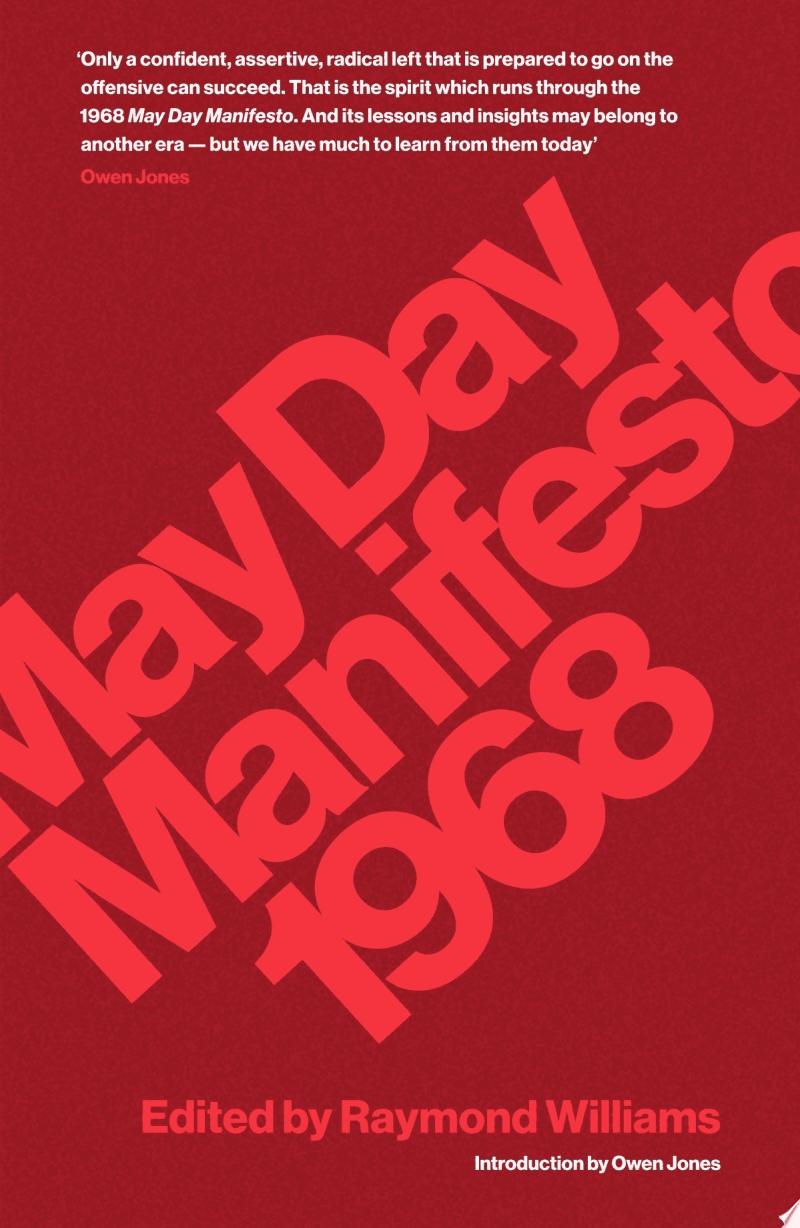
Raymond Williams (ed)
Anniversary edition of the classic political manifesto Urgently relevant to current arguments about the crisis of austerity, the 1968 manifesto set out a new agenda for socialist Britain, after the failure of the postwar consensus. It sought to change the nature of the state, to drive a wedge between finance and empire, to stress the importance of a planned economy for all, and to detach Britain from the imperial goals to which it had long been committed. Today, the spirit of The May Day Manifesto offers a road map to a brighter future. The original publication brought together the most influential radical voices of the era. Among the seventy signatories were Raymond Williams, E. P. Thompson, Stuart Hall, Iris Murdoch, Terry Eagleton, Ralph Miliband, and R. D. Laing. This edition comes with an introduction from Owen Jones, who brings a sense of urgency and hope to the contemporary debate.
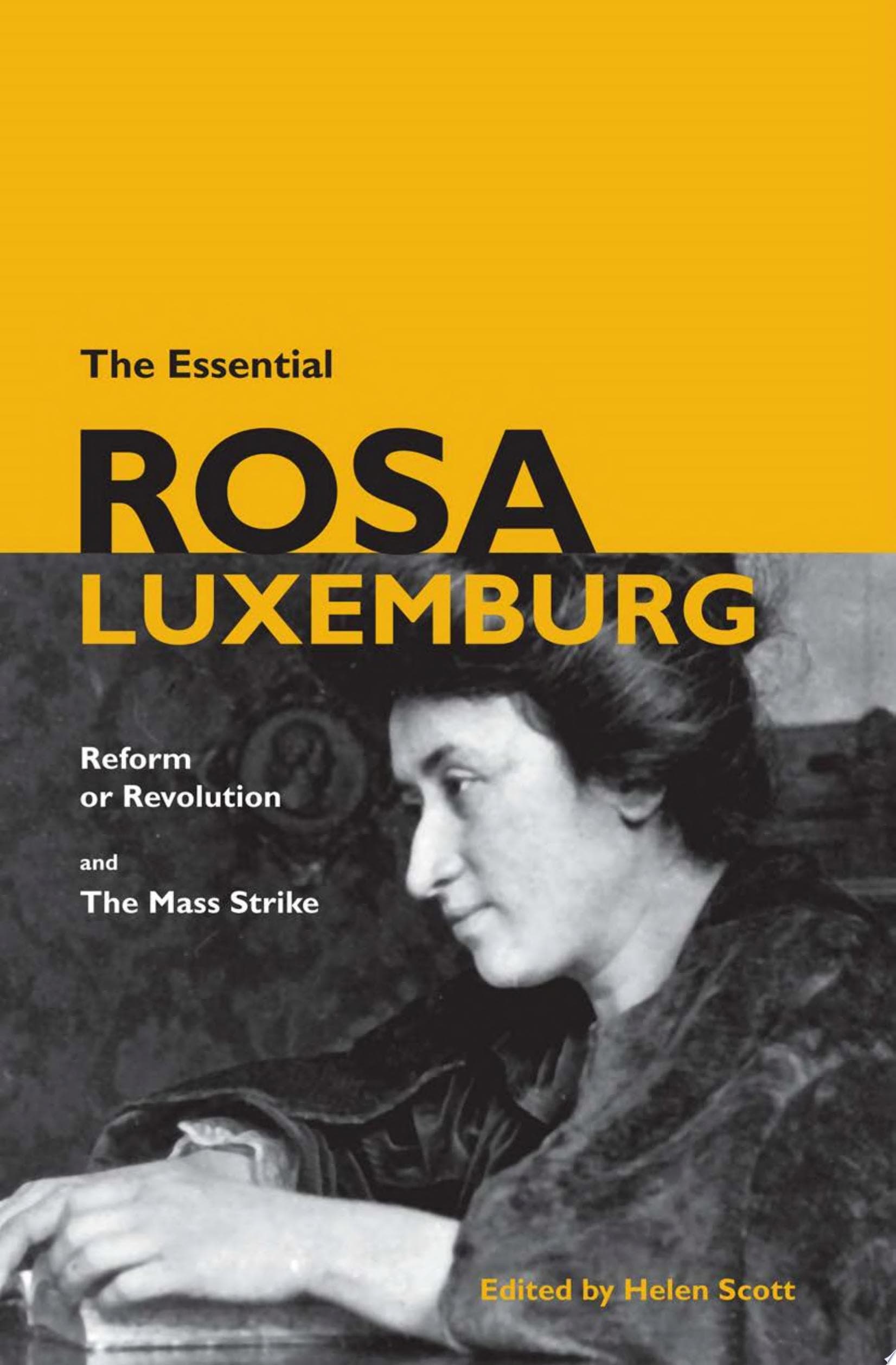
Helen Scott (ed)
A new, authoritative introduction to Rosa Luxemburg's most important works.
Damian F. White
This is the first comprehensive overview of the work of Murray Bookchin, the left-libertarian social theorist and political ecologist who is widely regarded as the visionary precursor of anti-corporate politics. Bookchin's writing spans fifty years and engages with a wide variety of issues: from ecology to urban planning, from environmental ethics to debates about radical democracy. Weaving insights from Hegel and Marx, Kropotkin and Mumford, Bookchin presents a critical theory whose central utopian message is 'things could be other than they are'. This accessible introduction maps the evolution of Bookchin’s project. It traces his controversial engagements with Marxism, anarchism, critical theory, postmodernism and eco-centric thought. It evaluates his attempt to develop a social ecology. Finally, it considers how his thinking relates to current debates in social theory and environmentalism, critical theory and philosophy, political ecology and urban theory. Offering a clear account of Bookchin's key themes, this book provides a critical but sympathetic account of the strengths and weaknesses of Bookchin's writing.
Carlos Taibo. The Autonomies Collective (trans)
A comprehensive overview of anarchism showing its continued relevance and the challenges it faces in the twenty-first century.
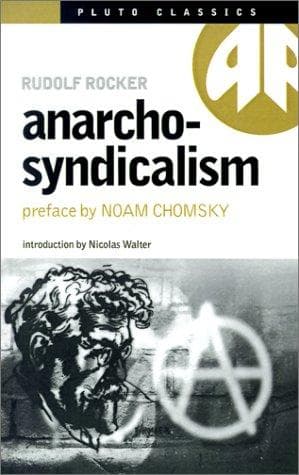
Rudolph Rocker
Rudolf Rockerb's classic survey of anarcho-syndicalism was written during the Spanish Civil War to explain to the wider reading public the ideology which inspired the social revolution in Spain. It remains unsurpassed as a general introduction to anarchist thought and an authoritative account of the early history of international anarchism by one of the movement's leading figures.
A new edition of this classic with extensive notes. Rudolph Rocker remains one of the most important figures in the history of anarchism, from his key role organizing against sweatshop labor in London in the 1900s to being the moving spirit behind the founding of the largest ever anarchist international--the IWMA IN 1921. In his later years he tried to chronicle the rise and fall of mass, organised anarchism in Europe. Anarchism and Anarcho-Syndicalism is Rocker's abridged version of his major work Anarcho-Syndicalism and helps to explain where organised anarchism came from. This book's lessons are a must for anyone interested in where it's going.
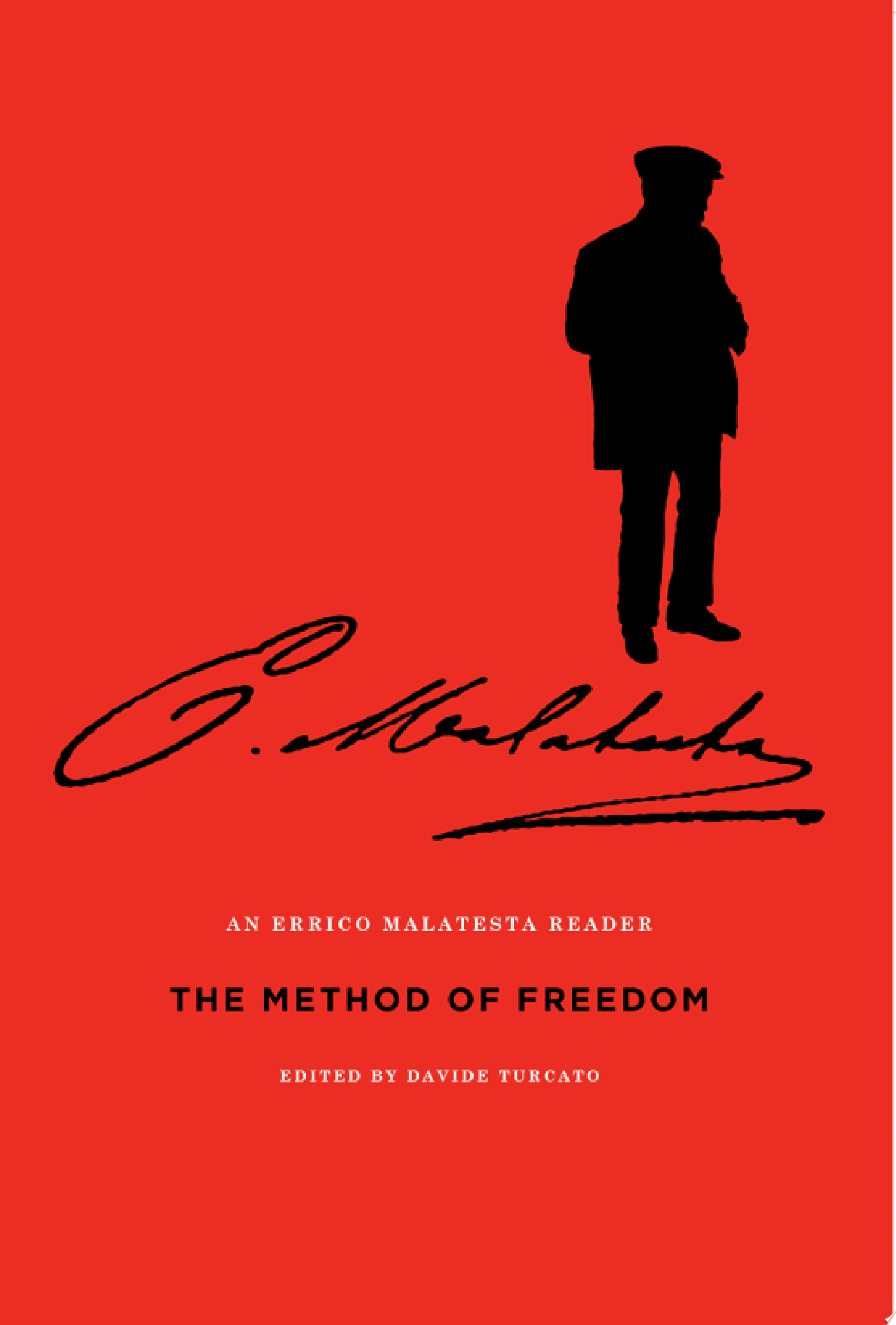
Errico Malatesta. Davide Turcato (ed). Paul Sharkey (trans)
“Anarchy, in common with socialism, has as its basis, its point of departure, its essential environment, equality of conditions; its beacon is solidarity and freedom is its method.”—Errico Malatesta The most distinctive and universal anarchist principle is the principle of coherence between ends and means: human emancipation cannot be achieved by authoritarian means. However, the same principle could also be read in the opposite direction: our ends should not be disconnected from our action; our ideals should not be so lofty as to make no difference to what we do here and now. The anarchist whose deeds and words have best illustrated both sides of that principle—the “idealist” and the “pragmatist”—is Errico Malatesta. Never one to divorce thought from action, or retreat into dogmatism, his life and ideals remain an inspiration the world over. The Method of Freedom is the first collection to capture the full range of Malatesta’s thought over sixty years as an anarchist propagandist. The Method of Freedom collects Malatesta's most enduring long-form essays--including "Anarchy" and "Our Program"--together with previously untranslated articles from the numerous journals he edited over his long newspaper career. In fact, nearly two-thirds of the collected texts have been newly translated into English. Written in Malatesta's clear, accessible style, these essays are sure to excite a new generation of radicals.