39 books available
Jamie Woodcock
This pathbreaking book offers a radical analysis of how people play, produce, and profit from video games, and the major role the industry plays in contemporary capitalism.
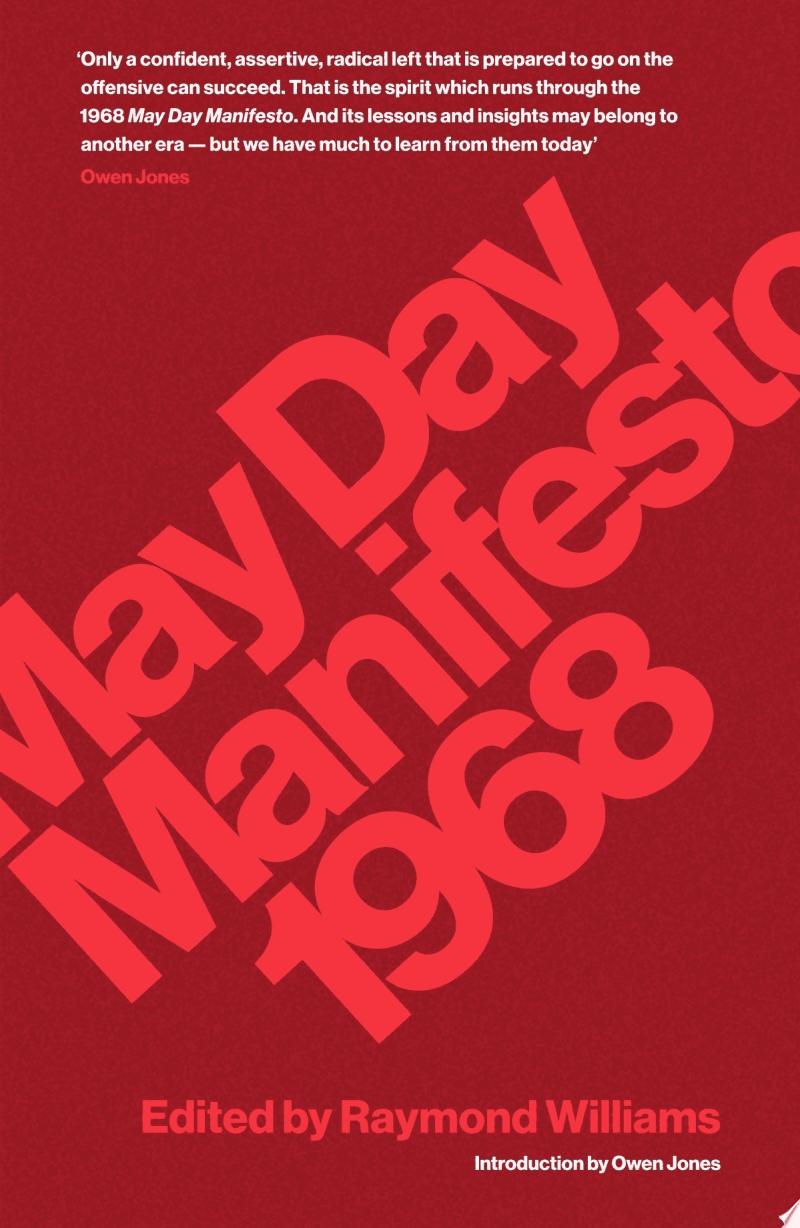
Raymond Williams (ed)
Anniversary edition of the classic political manifesto Urgently relevant to current arguments about the crisis of austerity, the 1968 manifesto set out a new agenda for socialist Britain, after the failure of the postwar consensus. It sought to change the nature of the state, to drive a wedge between finance and empire, to stress the importance of a planned economy for all, and to detach Britain from the imperial goals to which it had long been committed. Today, the spirit of The May Day Manifesto offers a road map to a brighter future. The original publication brought together the most influential radical voices of the era. Among the seventy signatories were Raymond Williams, E. P. Thompson, Stuart Hall, Iris Murdoch, Terry Eagleton, Ralph Miliband, and R. D. Laing. This edition comes with an introduction from Owen Jones, who brings a sense of urgency and hope to the contemporary debate.
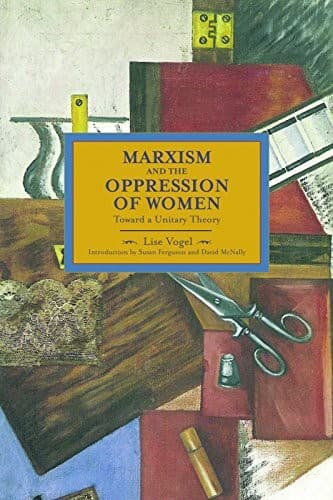
Lise Vogel
Lise Vogel revisits classical Marxian texts, tracking analyses of the woman question" in socialist theory and drawing on central theoretical categories of Marx's Capital to open up an original theorization of gender and the social production and reproduction of material life. Includes Vogel's article, Domestic Labor Revisited" which extends and clarifies her main theoretical innovations.
Tom Vague
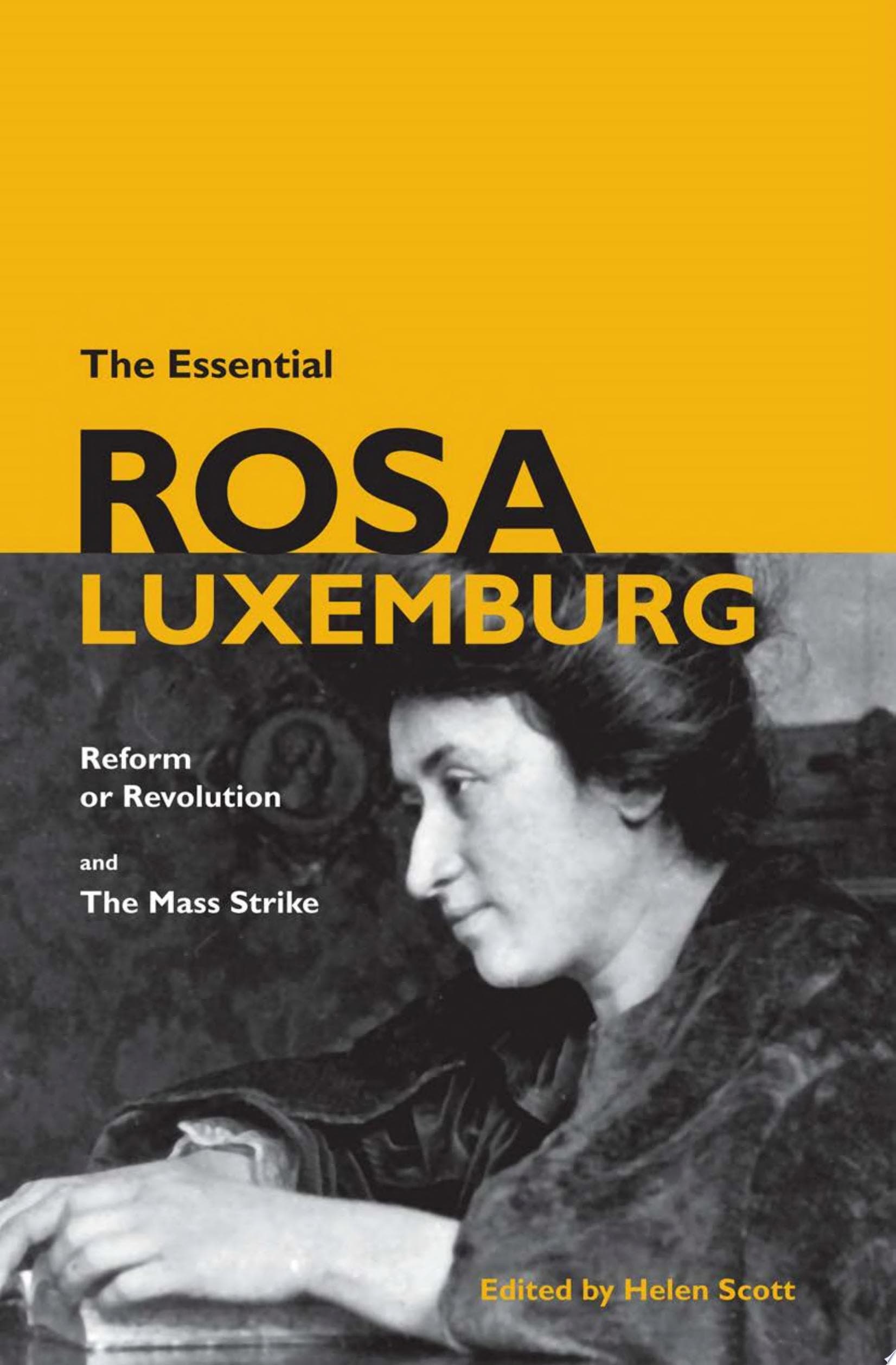
Helen Scott (ed)
A new, authoritative introduction to Rosa Luxemburg's most important works.
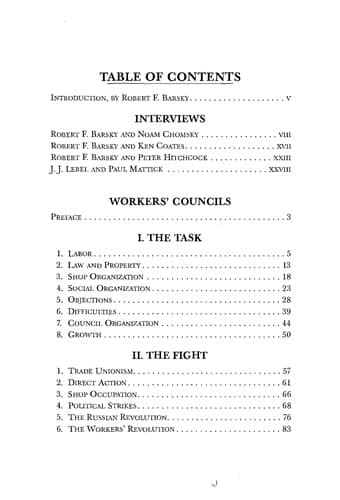
Anton Pannekoek
The blueprint for worker control and new community sustainability.
Karl Marx. Frederick Engels (ed)
Unabridged First published in 1867, Capital Volume 1 is Marx's most important work, a classic text for students of politics, philosophy and economics.
Georg Lukács
Tactics and Ethics collects Georg Lukács’s articles from the most politically active time of his life, a period encompassing his stint as deputy commissar of education in the Hungarian Soviet Republic. Including his famed essay on parliamentarianism—which earned Lukács the respectful yet severe criticism of Lenin—this book is a treasure chest of valuable insights from one of history’s great political philosophers.
Frédéric Lordon
Why do people work for other people? This seemingly naïve question is at the heart of Lordon's argument. To complement Marx's partial answers, especially in the face of the disconcerting spectacle of the engaged, enthusiastic employee, Lordon brings to bear a "Spinozist anthropology" that reveals the fundamental role of affects and passions in the employment relationship, reconceptualizing capitalist exploitation as the capture and remolding of desire. A thoroughly materialist reading of Spinoza's Ethics allows Lordon to debunk all notions of individual autonomy and self-determination while simultaneously saving the ideas of political freedom and liberation from capitalist exploitation. Willing Slaves of Capital is a bold proposal to rethink capitalism and its transcendence on the basis of the contemporary experience of work.
Richard Kuper (ed)
The essential writings of one of the most significant Marxist thinkers of recent decades, collected in one volume for the first time
Rohini Hensman
A defence of democracy at national and international levels, and critique of attacks on it in the name of "anti-imperialism."
Martha E. Giménez
This essential volume selects the key essays of renowned Marxist Feminist, and theorist of social reproduction, Martha E. Giménez.
Karl Marx & Federick Engels
The definitive introduction to history's most influential and controversial political document, updated for a new generation of readers. Since it was first written in 1848, The Communist Manifesto has been translated into more languages than any other modern text. All across the world--in countless places and idioms--it has been debated, shared, brandished, invoked, banned, burned, and even declared "dead." But in an era of escalating political, economic, health, and environmental crises, Marx and Engels' fierce indictment of capitalism is more relevant than ever, and their Manifesto remains required reading from the classroom to the picket line. Scholar Phil Gasper draws on his decades of teaching and organizing experience to produce a beautifully organized edition of the Manifesto that brings the text to life. By fully annotating the Manifesto with clear historical references and explication, a glossary, and including additional related texts, Gasper provides an accessible and comprehensive reference edition suited to first-time readers and dedicated partisans alike.
Neil Davidson
Eminent scholar-activist Neil Davidson's brilliance is on full display in this posthumous work, a timely and prescient introduction to the neoliberal era. While it is widely agreed that neoliberalism arose in the wake of the global economic crisis of the 1970s, there remains much debate about how to understand its significance and even how to define it. Is it best seen as an ideology of free market fundamentalism, a series of policy decisions gutting the public sector and breaking unions, or as an era of capitalist development with its own logic Bringing his considerable intellectual breadth and characteristic generosity to bear on this question, Neil Davidson shows that to truly appreciate what is unique about neoliberalism, and what marks it out as a continuation of capitalism more generally, it is necessary to examine its social dimensions. What Was Neoliberalism? holds fast to Davidson's conviction that thoroughly understanding the past means being better prepared for the struggles of the future.
John Carter & Dave Moreland (eds)
"Anti-Capitalist Britain is an account of the state of left and radical politics in the UK, delivered through a study of recent anti-capitalist protests and movements. The book is a collaborative project involving writers from various universities in the UK and recent participants in anti-capitalist actions."--BOOK JACKET.