39 books available
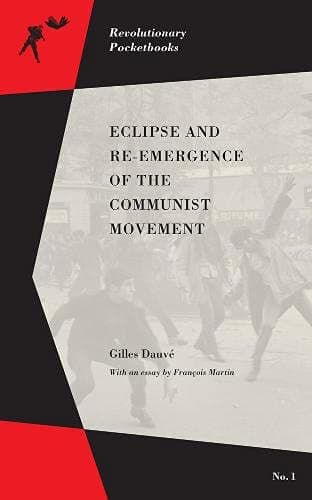
Gilles Dauvé & Francois Martin
In the years following 1968, a number of people involved in the most radical aspects of the French general strike felt the need to reflect on their experiences and to relate them to past revolutionary endeavors. This meant studying previous attempts and theories, namely those of the post-1917 German-Dutch and Italian Communist Left. The original essays included here were first written between 1969 and 1972 and circulated amongst left communist and worker circles. But France was not the only country where radicals sought to contextualize their political environment and analyze their own radical pasts. Over the years these three essays have been published separately in various languages and printed as books in both the United States and the UK with few changes. This third English edition is updated to take into account the contemporary political situation; half of the present volume is new material. The book argues that doing away with wage-labor, class, the State, and private property is necessary, possible, and can only be achieved by a historical break, one that would certainly differ from October 1917… yet it would not be a peaceful, gradual, piecemeal evolution either. Like their historical predecessors—Marx, Rosa Luxemburg, Anton Pannekoek, Amadeo Bordiga, Durruti, and Debord—the authors maintain a belief in revolution.
Dave Wise & Stuart Wise
Charles Umney
Social class remains a fundamental presence in British life in the twenty-first century. It is woven into the very fabric of social and political discourse, undiminished by the end of mass industry; unaugmented despite the ascendancy of 'ordinary working people' and other substitute phrases. Absent from this landscape, however, is any compelling Marxist expression or analysis of class.In Class Matters, Charles Umney brings Marxist analysis out of the 19th century textiles mill, and into the call centres, office blocks and fast food chains of modern Britain. He shows how core Marxist concepts are vital to understanding increasing pay inequality, decreasing job security, increasing routinisation and managerial control of the labour process.Providing a critical analysis of competing perspectives, Umney argues that class must be understood as a dynamic and exploitative process integral to capitalism - rather than a descriptive categorisation - in order for us to better understand the gains capital has made at the expense of labour over the last four decades.
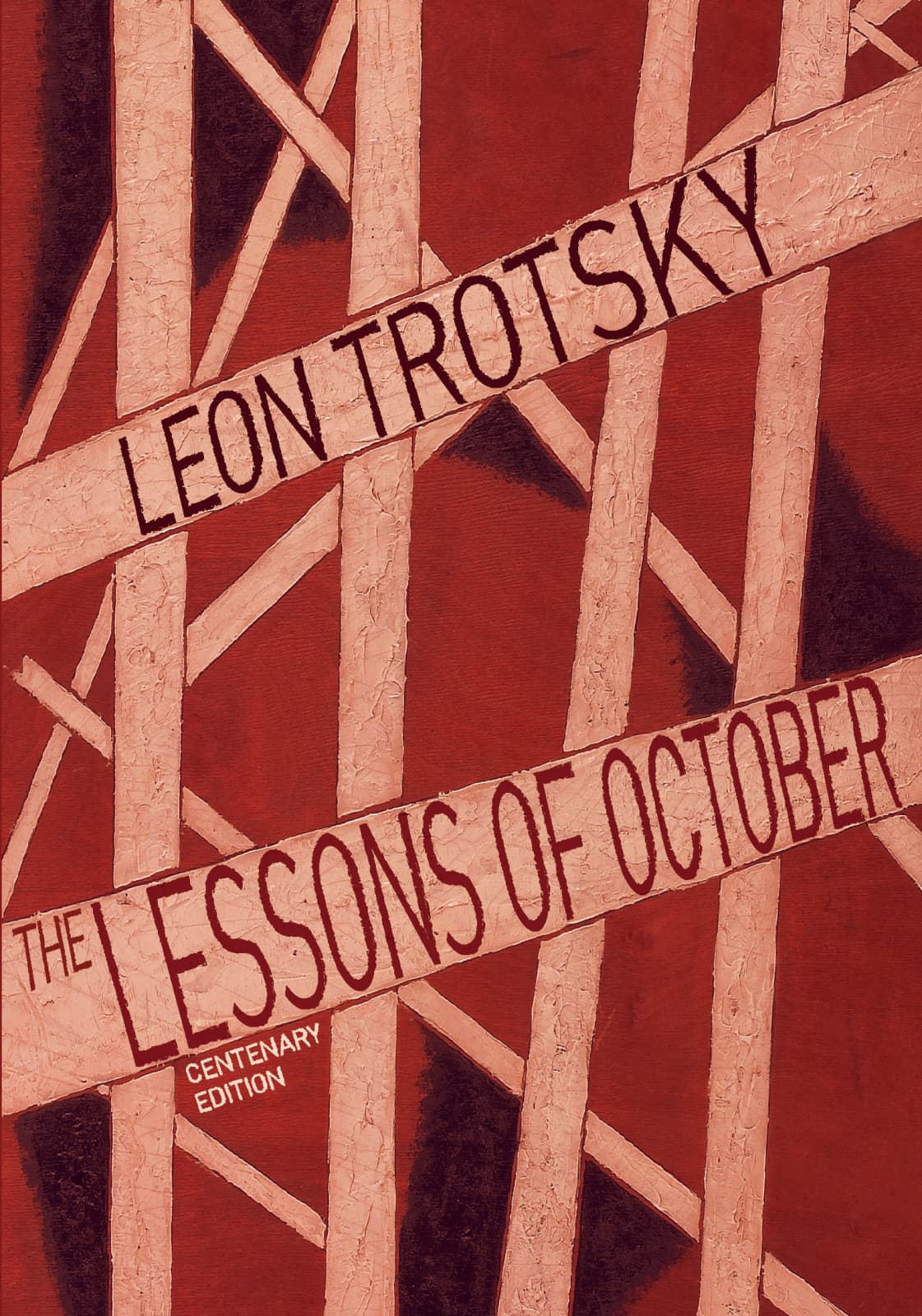
Leon Trotsky
An critical examination of the key actors and larger social movements that led to the rise of the Bolsheviks.
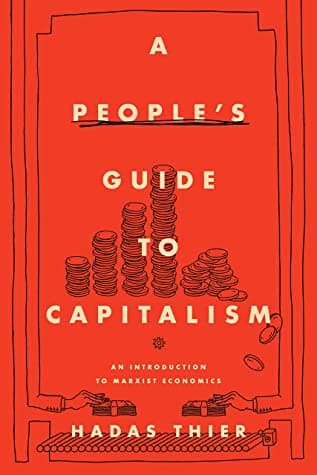
Hadas Their
A lively, accessible, and timely guide to Capitalism for those who want to understand and dismantle the world of the 1%
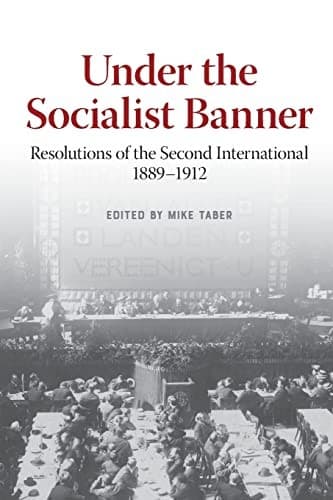
Mike Taber (ed)
A collection of all the resolutions adopted by Second International congresses during the movement's revolutionary Marxist period of 1889-1912.
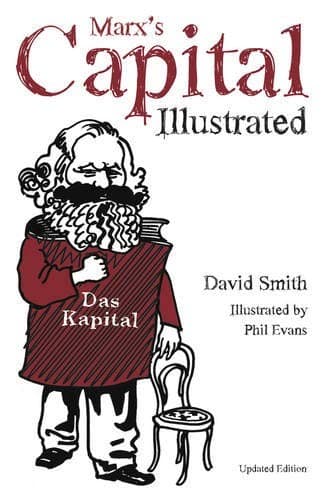
David Smith & Phil Evans
""[Marx's Kapital: An Illustrated Introduction is] valuable and in some respects more so than all the interpretations and popularizations I have read."-- C.L.R. JamesRichly illustrated, strikingly accessible, and surprisingly comprehensive, David N. Smith and Phil Evans present Karl Marx's Capital as it was meant to be: in graphic novel form."--
Paul Mattick
Communism aims at putting working people in charge of their lives. A multiplicity of Councils, rather than a big state bureaucracy is needed to empower working people and to focus control over society. Mattick develops a theory of a council communism through his survey of the history of the left in Germany and Russia. He challenges Bolshevik politics: especially their perspectives on questions of Party and Class, and the role of Trade Unions. Mattick argues that a The revolutions which succeeded, first of all, in Russia and China, were not proletarian revolutions in the Marxist sense, leading to the a association of free and equal producersa, but state-capitalist revolutions, which were objectively unable to issue into socialism. Marxism served here as a mere ideology to justify the rise of modified capitalist systems, which were no longer determined by market competition but controlled by way of the authoritarian state. Based on the peasantry, but designed with accelerated industrialisation to create an industrial proletariat, they were ready to abolish the traditional bourgeoisie but not capital as a social relationship.This type of capitalism had not been foreseen by Marx and the early Marxists, even though they advocated the capture of state-power to overthrow the bourgeoisie a but only in order to abolish the state itself.a
Henryk Grossman. Ian Birchill, Rick Kuhn & Einde O'Callaghan (trans). Rick Kuhn (ed)
Henryk Grossman's substantial essays highlight vital but still neglected aspects of Marx's economic theory
Chris Harman
We've been told for years that the capitalist free market is a self-correcting perpetual growth machine in which sellers always find buyers, precluding any major crisis in the system. Then the credit crunch of August 2007 turned into the great crash of September–October 2008, leading one apologist for the system, Willem Buiter, to write of "the end of capitalism as we knew it." As the crisis unfolded, the world witnessed the way in which the runaway speculation of the "shadow" banking system wreaked havoc on world markets, leaving real human devastation in its wake. Faced with the financial crisis, some economic commentators began to talk of "zombie banks"–financial institutions that were in an "undead state" and incapable of fulfilling any positive function but a threat to everything else. What they do not realize is that twenty-first century capitalism as a whole is a zombie system, seemingly dead when it comes to achieving human goals.
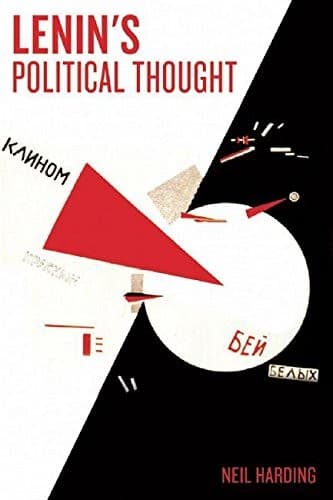
Neil Harding
Caricatured as a superhuman idol in the former Communist states, the Russian revolutionary socialist V. I. Lenin has long been reversely caricatured in the West as an authoritarian elitist. In this brilliant, carefully researched analysis, Neil Harding upends these traditional Cold War interpretations of Lenin's thought and activity. Harding shows how Lenin's flexible and continuously changing theoretical, strategic, and tactical insights were firmly grounded in the emancipatory potential for working-class revolution in Russia and around the world. Neil Harding is an internationally renowned scholar of Soviet history.
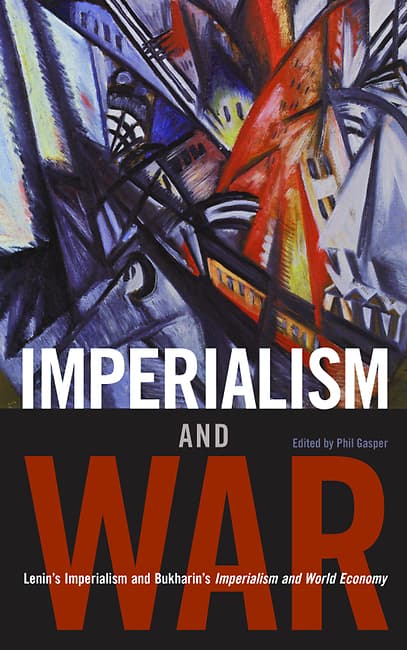
Vladimir I. Lenin, Nikolai Ivanovich Bukharin
The two founding texts of the analysis of capitalism and imperialism in one volume, with annotation.
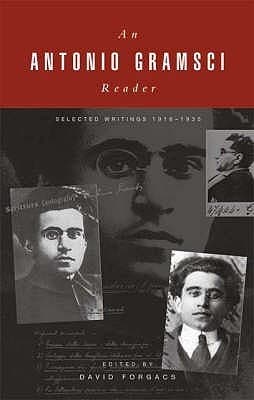
David Forgacs
This selection of Gramsci's writings includes his most important political, cultural and historical work. It focuses on key concepts - such as hegemony, passive revolution, civil society, common sense - and important texts on popular culture.
Philip S. Foner (ed)
Essays and speeches from 1889-1933, long unavailable in the US, on women's equality, labor, peace, and socialism.
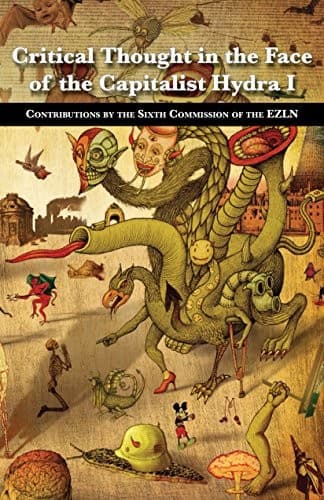
EZLN
"How do we comprehend a crisis that simultaneously began over 500 years ago and yet looms on our immediate horizon? What unites the grave situation of Greece with that of the tens of thousands of killed and disappeared in Mexico? What might explain the recurring failure and seeming betrayal, in country after country, of the electoral left? How might gentrification of urban centers across the world be inextricably connected to the pipelines of an unhinged extractivism (from Bolivia to Standing Rock)? How can we explain that on a daily basis, an ever-greater proportion of humanity is expelled from production and abandoned to its fate as simple surplus? In this daring book, the Zapatistas put forth the hypothesis that a rigorous application of critical thought shows us that the inner connection of these phenomena can be found in the historically unprecedented crisis of capitalism that today gathers steam and in the near future promises to engulf all of humanity in a perfect storm. In May of 2015, the Zapatista Army for National Liberation (EZLN) hosted a seminar in Chiapas, Mexico, titled "Critical Thought in the Face of the Capitalist Hydra," in which they invited thinkers from across the world to join them in analyzing the economic instability, unceasing war, mass displacement, and ecological devastation that today characterize our world. This book presents the complete set of interventions made by the EZLN at that seminar. Rescuing critical thought from both the trendy relativism of contemporary academia and the tweets and facebook posts that now stand in for it, the EZLN outlines the contours of this crisis as well as the innovative practices of politics that have allowed Zapatismo to survive and constitute one of the few large-scale anti-capitalist struggles in the world today. Yet the Zapatistas don't offer themselves as a model to be followed, but rather insist that each of us analyze this crisis from our own locations in order to adequately confront the monumental task before us. The volume closes with poetry and art solicited by the EZLN from various artists and authors as their contribution to the seminar. This text is a translation of the book, El Pensamiento Crítico Frente a la Hidra Capitalista I, published in Mexico by the EZLN in July of 2015. That text and this English translation include several texts not publicly presented at the seminar. In addition, various theorists, intellectuals, and militants from around the world were invited to offer presentations to the more than 2,600 seminar attendees. Their contributions can be found in Spanish in Volumes II and III of this series, published in Mexico."--Publisher.
Frederick Engels
The classic account of urban working-class life in Manchester during the Industrial Revolution, first published in English in 1892.
Onorato Damen
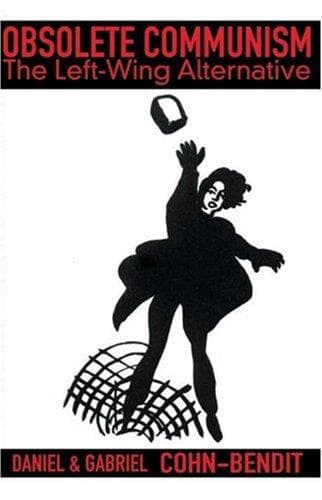
Daniel & Gabriel Cohn-Bendit
Daniel Cohn-Bendit - aka Danny the Red - led demonstrations at the Sorbonne in Nanterre which led to disciplinary action by the university and questioning by the local police. The immediate result of this heavy-handed discipline was a huge increase in the size of the French student movement and the outbreak of rioting which brought France to the edge of revolution in May '68. Cohn-Bendit's book brings first hand reporting from the front lines of that struggle and brings an intimacy not available in other accounts. Essential reading for revolutionaries.
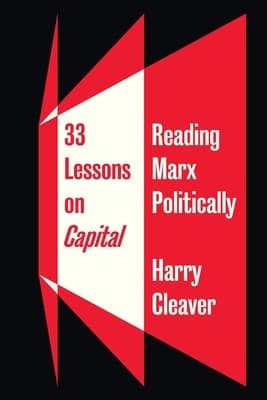
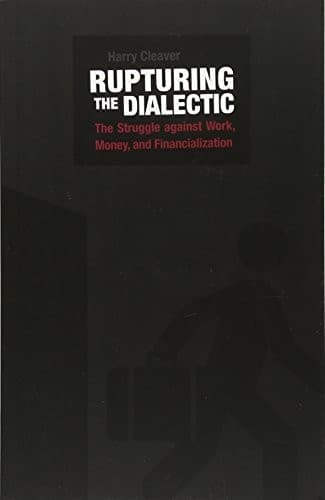
Harry Cleaver
This book provides an up-to-date reading of Capital Volume I, emphasizing the relevance of Marx's analysis to everyday twenty-first century struggles. Harry Cleaver's treatise outlines and critiques Marx's analysis chapter by chapter. His unique interpretation of Marx's labour theory of value reveals how every theoretical category of Capital designates aspects of class struggle in ways that help us resist and escape them. At the same time, while rooted within the tradition of workerism, he understands the working class to include not only the industrial proletariat but also unwaged peasants, housewives, children and students. A challenge to scholars and an invaluable resource for students and activists today.
Rupturing the Dialectic interprets capitalism's most recent crises and demonstrates how ordinary men and women can, and do, rupture the smooth functioning of the system that exploits them. While Cleaver's work has been central to autonomist Marxist theory for decades, he has produced very little written material. AK Press convinced him to turn a lecture he gave in 2012 into a small book, a project which then grew into a new major work. Cleaver fans, social theorists, and activists in general will now have his insights brought up to date to include our current economic and political crises.
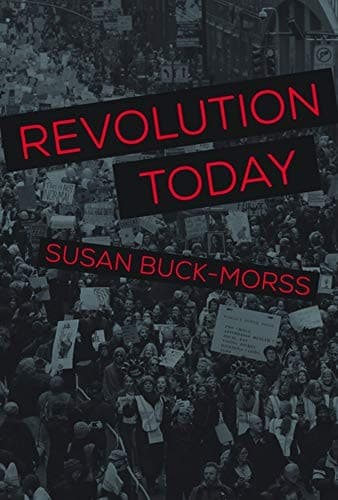
Susan Buck-Morss
Susan Buck-Morss highlights new forms of international solidarity and revolutionary subjectivity that can break the impasse of neoliberal capitalism and reactionary nationalism.
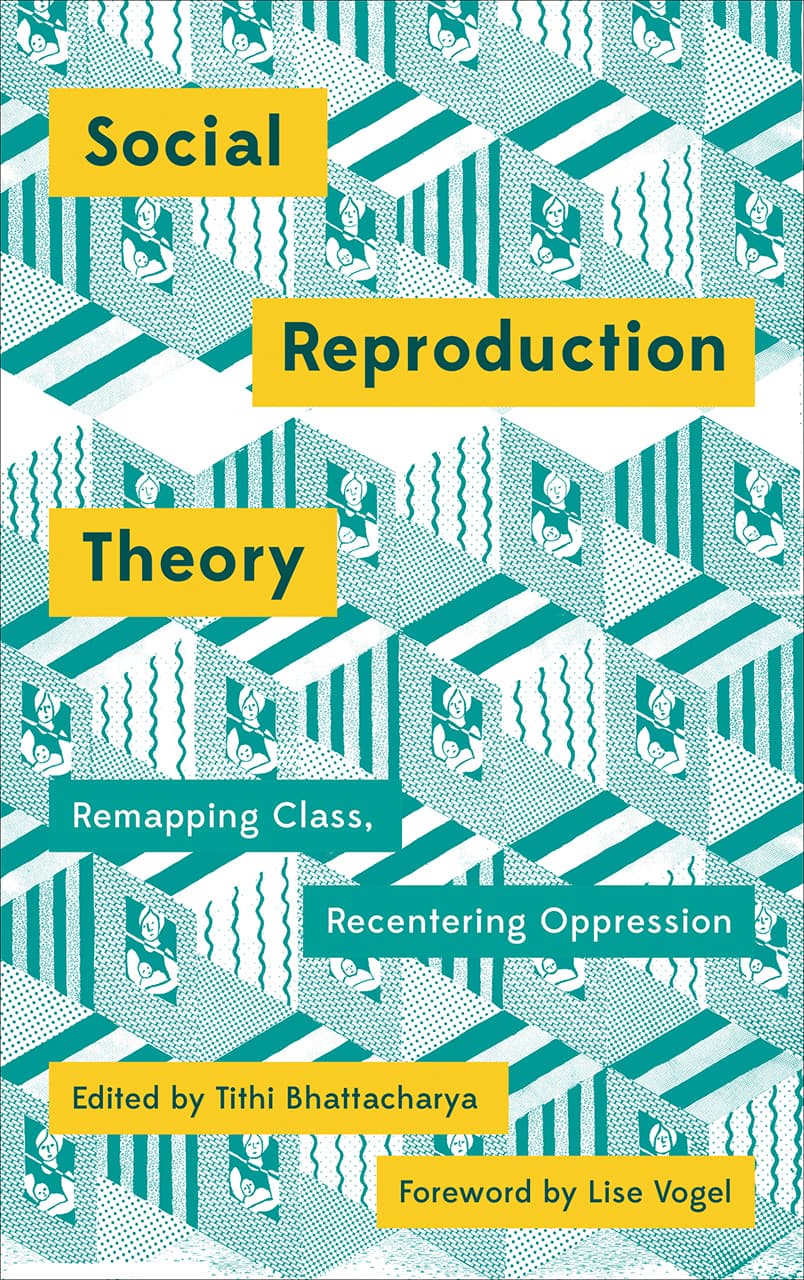
Tithi Bhattacharya (ed)
Crystallizing the essential principles of social reproductive theory, this anthology provides long-overdue analysis of everyday life under capitalism. It focuses on issues such as childcare, healthcare, education, family life, and the roles of gender, race, and sexuality--all of which are central to understanding the relationship between exploitation and social oppression. Tithi Bhattacharya brings together some of the leading writers and theorists, including Lise Vogel, Nancy Fraser, and Susan Ferguson, in order for us to better understand social relations and how to improve them in the fight against structural oppression.
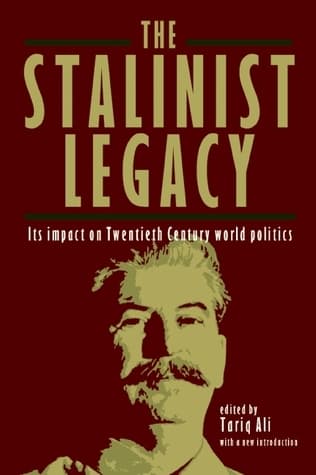
Traiq Ali (ed)
Tariq Ali, Isaac Deutscher, Ernest Mandel, and others analyze the nature of Stalinism, and its continuing impact on world politics.
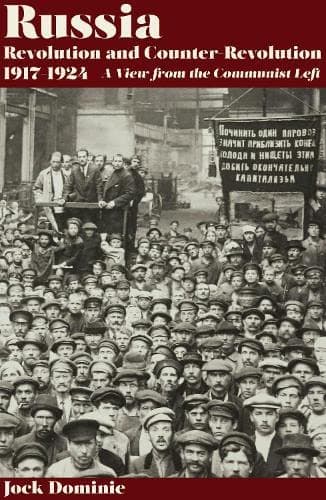
Jock Dominic