8 books available
Naomi Klein
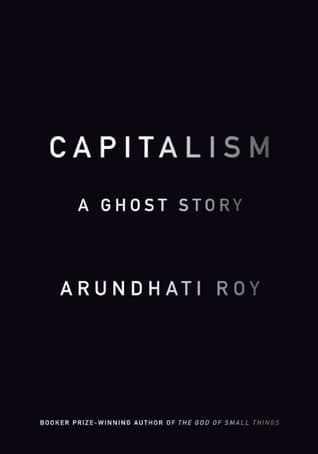
Arundhati Roy
"From the poisoned rivers, barren wells, and clear-cut forests, to the hundreds of thousands of farmers who have committed suicide to escape punishing debt, to the hundreds of millions of people who live on less than two dollars a day, there are ghosts nearly everywhere you look in India. India is a nation of 1.2 billion, but the country's 100 richest people own assets equivalent to one-fourth of India's gross domestic product. Capitalism: A Ghost Story examines the dark side of democracy in contemporary India, and shows how the demands of globalized capitalism has subjugated billions of people to the highest and most intense forms of racism and exploitation."--
Charles Umney
Social class remains a fundamental presence in British life in the twenty-first century. It is woven into the very fabric of social and political discourse, undiminished by the end of mass industry; unaugmented despite the ascendancy of 'ordinary working people' and other substitute phrases. Absent from this landscape, however, is any compelling Marxist expression or analysis of class.In Class Matters, Charles Umney brings Marxist analysis out of the 19th century textiles mill, and into the call centres, office blocks and fast food chains of modern Britain. He shows how core Marxist concepts are vital to understanding increasing pay inequality, decreasing job security, increasing routinisation and managerial control of the labour process.Providing a critical analysis of competing perspectives, Umney argues that class must be understood as a dynamic and exploitative process integral to capitalism - rather than a descriptive categorisation - in order for us to better understand the gains capital has made at the expense of labour over the last four decades.
Hadas Their
A lively, accessible, and timely guide to Capitalism for those who want to understand and dismantle the world of the 1%
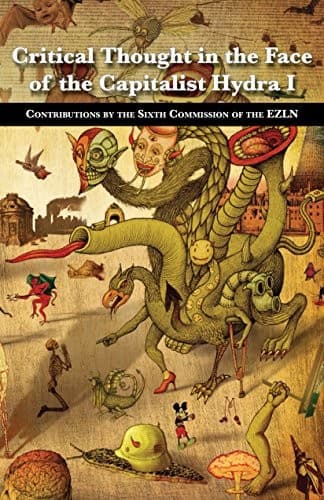
EZLN
"How do we comprehend a crisis that simultaneously began over 500 years ago and yet looms on our immediate horizon? What unites the grave situation of Greece with that of the tens of thousands of killed and disappeared in Mexico? What might explain the recurring failure and seeming betrayal, in country after country, of the electoral left? How might gentrification of urban centers across the world be inextricably connected to the pipelines of an unhinged extractivism (from Bolivia to Standing Rock)? How can we explain that on a daily basis, an ever-greater proportion of humanity is expelled from production and abandoned to its fate as simple surplus? In this daring book, the Zapatistas put forth the hypothesis that a rigorous application of critical thought shows us that the inner connection of these phenomena can be found in the historically unprecedented crisis of capitalism that today gathers steam and in the near future promises to engulf all of humanity in a perfect storm. In May of 2015, the Zapatista Army for National Liberation (EZLN) hosted a seminar in Chiapas, Mexico, titled "Critical Thought in the Face of the Capitalist Hydra," in which they invited thinkers from across the world to join them in analyzing the economic instability, unceasing war, mass displacement, and ecological devastation that today characterize our world. This book presents the complete set of interventions made by the EZLN at that seminar. Rescuing critical thought from both the trendy relativism of contemporary academia and the tweets and facebook posts that now stand in for it, the EZLN outlines the contours of this crisis as well as the innovative practices of politics that have allowed Zapatismo to survive and constitute one of the few large-scale anti-capitalist struggles in the world today. Yet the Zapatistas don't offer themselves as a model to be followed, but rather insist that each of us analyze this crisis from our own locations in order to adequately confront the monumental task before us. The volume closes with poetry and art solicited by the EZLN from various artists and authors as their contribution to the seminar. This text is a translation of the book, El Pensamiento Crítico Frente a la Hidra Capitalista I, published in Mexico by the EZLN in July of 2015. That text and this English translation include several texts not publicly presented at the seminar. In addition, various theorists, intellectuals, and militants from around the world were invited to offer presentations to the more than 2,600 seminar attendees. Their contributions can be found in Spanish in Volumes II and III of this series, published in Mexico."--Publisher.
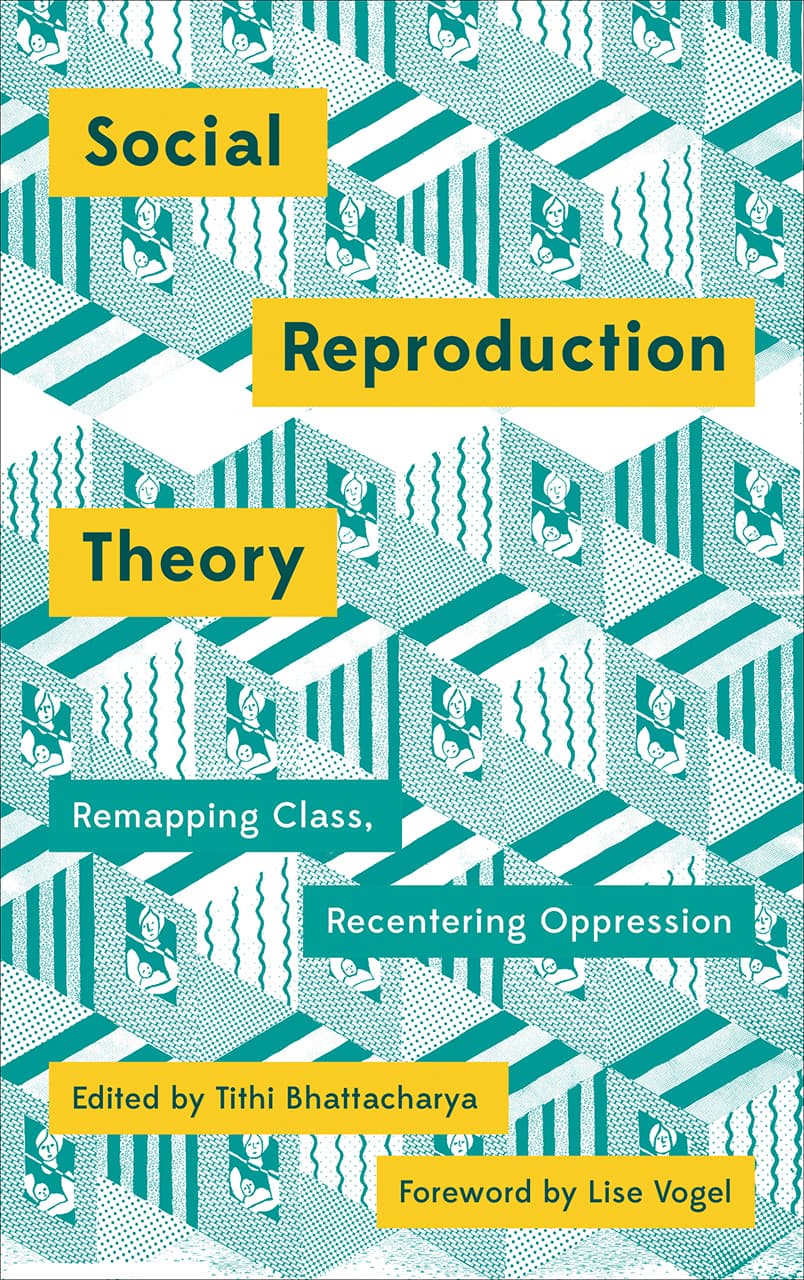
Tithi Bhattacharya (ed)
Crystallizing the essential principles of social reproductive theory, this anthology provides long-overdue analysis of everyday life under capitalism. It focuses on issues such as childcare, healthcare, education, family life, and the roles of gender, race, and sexuality--all of which are central to understanding the relationship between exploitation and social oppression. Tithi Bhattacharya brings together some of the leading writers and theorists, including Lise Vogel, Nancy Fraser, and Susan Ferguson, in order for us to better understand social relations and how to improve them in the fight against structural oppression.
Richard Kuper (ed)
The essential writings of one of the most significant Marxist thinkers of recent decades, collected in one volume for the first time
Andy Anderson & Mark Anderson