27 books available
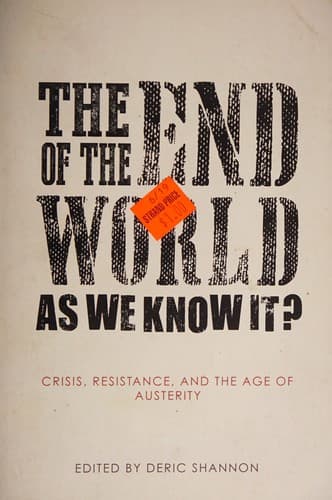
Deric Shannon (ed)
Shannon explores the origins and ramifications of the Great Recession, as well as the experiences of those living through it. Crisis is a recurring trait of capitalism and a necessary one for the economy to continue as it does. How can we learn from capitalist catastrophes unless we connect historical patterns to contemporary conditions? Divided into five sections - Origins, Effects, The Response of the Dispossessed, The Ruling Class Response and Education and the Student Response - the contributors outline the problem and offer tangible strategies for economic sustainability.
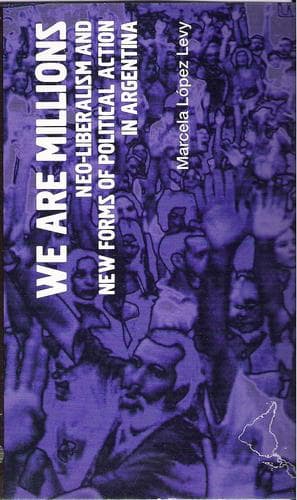
Marcela López Levy
Since the 1970s, a brutal transference of resources from the poor to the rich has taken place here in Argentina. This book looks at the politics which led to mass poverty and unemployment, and describes the rich and varied social responses to economic meltdown and political crisis.
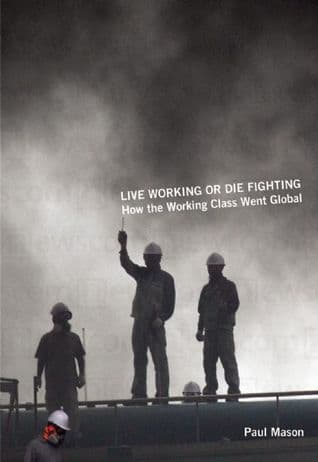
Paul Mason
"This is micro-historical writing at its best."--Walden Bello, author of Dilemmas of Domination "Brilliant."--Ken Loach The stories in this book come to life through the voices of remarkable individuals: child laborers in Dickensian England, visionary women on Parisian barricades, gun-toting railway strikers in America's Wild West, and beer-swilling German metalworkers who tried to stop World War I. It is a story of urban slums, self-help cooperatives, choirs and brass bands, free love, and self-education by candlelight. And, as the author shows, in the developing industrial economies of the world, it is still with us. Live Working or Die Fighting celebrates a common history of defiance, idealism, and self-sacrifice, one as alive and active today as it was two hundred years ago. It is a unique and inspirational book. Paul Mason is an award-winning journalist who reports regularly on labor rights and social justice stories as economics editor for BBC World News America and BBC Newsnight. In addition to Live Working or Die Fighting, which was shortlisted as a 2007 Guardian First Book Award, Mason is the author of Meltdown: The End of the Age of Greed (Verso Books).
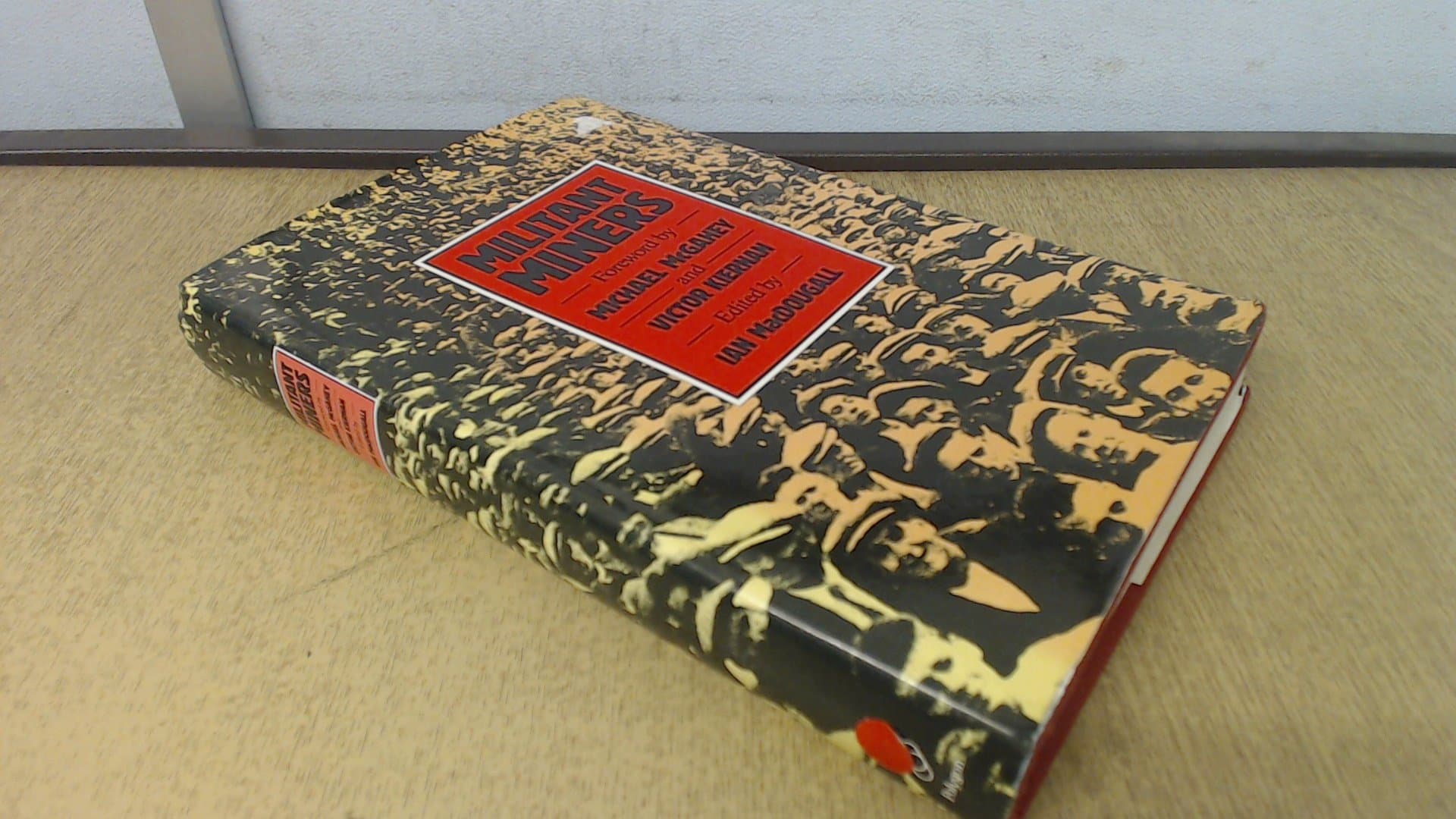
Ian MacDougall (ed)
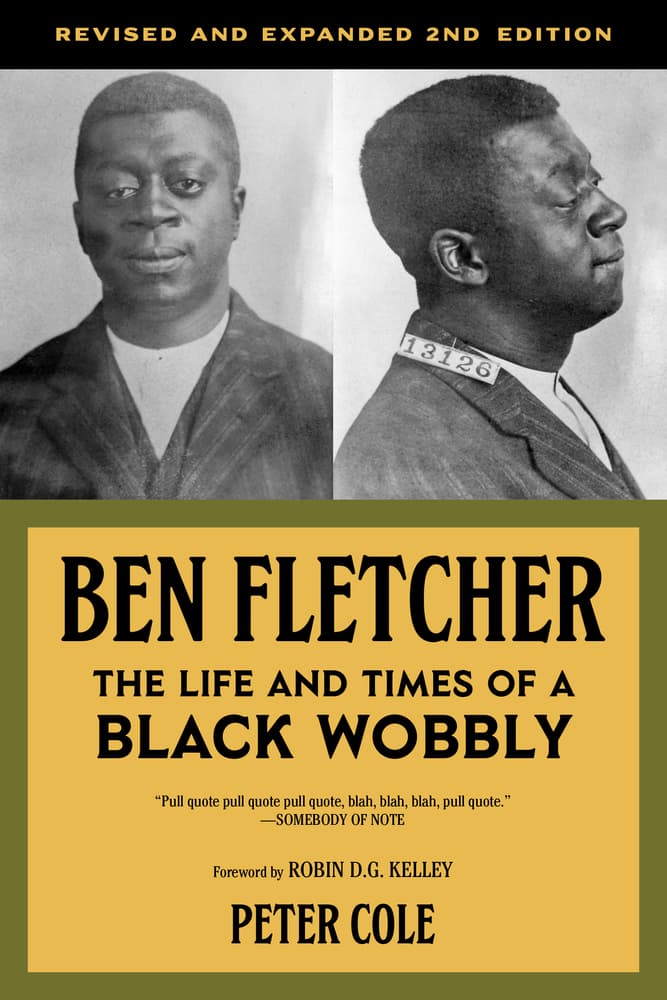
Peter Cole
Ben Fletcher: The Life and Times of a Black Wobbly tells the story of one of the greatest heroes of the American working class. A brilliant union organiser and a humorous orator, Benjamin Fletcher (1890 - 1949) was a tremendously important and well-loved African American member of the IWW during its heyday. Fletcher helped found and lead Local 8 of the IWW's Marine Transport Workers Industrial Union, unquestionably the most powerful interracial union of its era, taking a principled stand against all forms of xenophobia and exclusion.
Little, Sharp, Stevenson, Wilson
A vital work on labor movement strategy by experienced union activists The heart of any trade union is its reps and activists organizing in the workplace. After years of membership decline across sectors, a renewed recognition of this essential fact is behind the 'turn to organizing' in the union movement today. This turn to collective organizing builds strength at a local as well as a national level, and also aids in mobilizing around a wider range of political issues from campaigning against austerity to taking action for the environment. In recent years, this fusion of workplace organizing and national campaigning has been exemplified by Europe's largest education trade union, the National Education Union (NEU). In Lessons in Organising, the authors bring together activist, academic and union official perspectives to assess the potential (and the limitations) of the 'turn to organizing' and set out the case for a new transformative trade unionism for the 21st century.
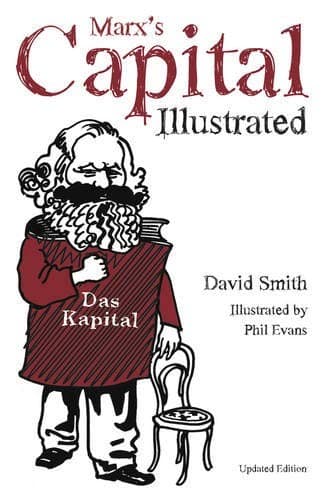
David Smith & Phil Evans
""[Marx's Kapital: An Illustrated Introduction is] valuable and in some respects more so than all the interpretations and popularizations I have read."-- C.L.R. JamesRichly illustrated, strikingly accessible, and surprisingly comprehensive, David N. Smith and Phil Evans present Karl Marx's Capital as it was meant to be: in graphic novel form."--
Paul Mattick
Communism aims at putting working people in charge of their lives. A multiplicity of Councils, rather than a big state bureaucracy is needed to empower working people and to focus control over society. Mattick develops a theory of a council communism through his survey of the history of the left in Germany and Russia. He challenges Bolshevik politics: especially their perspectives on questions of Party and Class, and the role of Trade Unions. Mattick argues that a The revolutions which succeeded, first of all, in Russia and China, were not proletarian revolutions in the Marxist sense, leading to the a association of free and equal producersa, but state-capitalist revolutions, which were objectively unable to issue into socialism. Marxism served here as a mere ideology to justify the rise of modified capitalist systems, which were no longer determined by market competition but controlled by way of the authoritarian state. Based on the peasantry, but designed with accelerated industrialisation to create an industrial proletariat, they were ready to abolish the traditional bourgeoisie but not capital as a social relationship.This type of capitalism had not been foreseen by Marx and the early Marxists, even though they advocated the capture of state-power to overthrow the bourgeoisie a but only in order to abolish the state itself.a
Chris Harman
We've been told for years that the capitalist free market is a self-correcting perpetual growth machine in which sellers always find buyers, precluding any major crisis in the system. Then the credit crunch of August 2007 turned into the great crash of September–October 2008, leading one apologist for the system, Willem Buiter, to write of "the end of capitalism as we knew it." As the crisis unfolded, the world witnessed the way in which the runaway speculation of the "shadow" banking system wreaked havoc on world markets, leaving real human devastation in its wake. Faced with the financial crisis, some economic commentators began to talk of "zombie banks"–financial institutions that were in an "undead state" and incapable of fulfilling any positive function but a threat to everything else. What they do not realize is that twenty-first century capitalism as a whole is a zombie system, seemingly dead when it comes to achieving human goals.
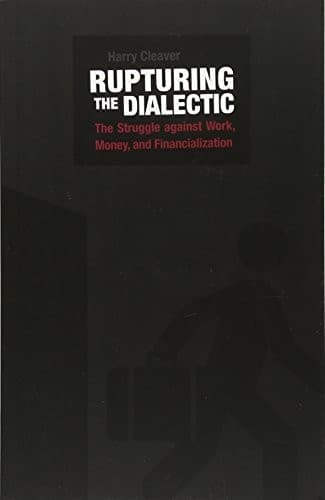
Harry Cleaver
Rupturing the Dialectic interprets capitalism's most recent crises and demonstrates how ordinary men and women can, and do, rupture the smooth functioning of the system that exploits them. While Cleaver's work has been central to autonomist Marxist theory for decades, he has produced very little written material. AK Press convinced him to turn a lecture he gave in 2012 into a small book, a project which then grew into a new major work. Cleaver fans, social theorists, and activists in general will now have his insights brought up to date to include our current economic and political crises.
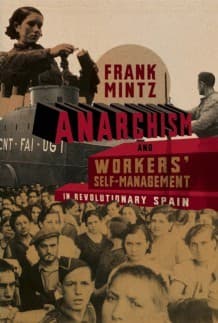
Frank Mintz. Paul Sharkey (trans)
An exposition of the logic, organization, and economics of workers' self-management during the Spanish Revolution.
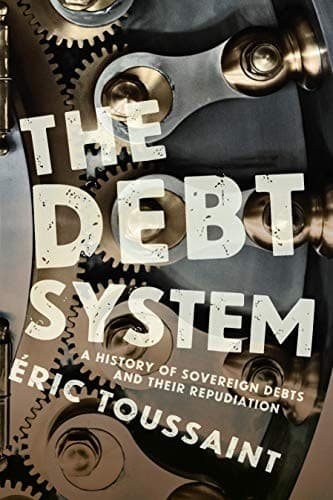
Éric Toussaint
For as long as there have been rich nations and poor nations, debt has been a powerful force for maintaining the unequal relations between them. Treated as sacrosanct, immutable, and eternally binding, it has become the yoke of choice for imperial powers in the post-colonial world to enforce their subservience over the global south. In this ground-breaking history, renowned economist Éric Toussaint argues for a radical reversal of this balance of accounts through the repudiation of sovereign debt. Éric Toussaint, Senior Lecturer at the University of Liège, is President of Committee for the Abolition of Illegitimate Debts, Belgium. He is the co-author of Debt, the IMF, and the World Bank, Sixty Questions, Sixty Answers.
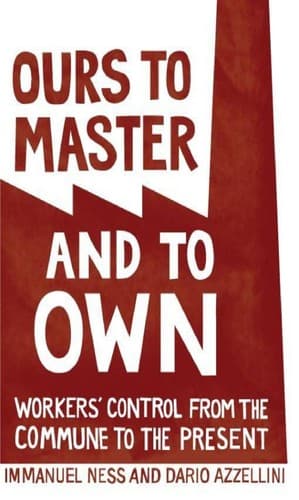
Immanuel Ness & Dario Azzellini
From the dawning of the industrial epoch, wage earners have organized themselves into unions, fought bitter strikes, and gone so far as to challenge the very premises of the system by creating institutions of democratic self-management aimed at controlling production without bosses. With specific examples drawn from every corner of the globe and every period of modern history, this pathbreaking volume comprehensively traces this often underappreciated historical tradition. Ripe with lessons drawn from historical and contemporary struggles for workers’ control, Ours to Master and to Own is essential reading for those struggling to create a new world from the ashes of the old. Immanuel Ness is professor of political science at Brooklyn College, City University of New York, and edits WorkingUSA. Dario Azzellini is a writer, documentary director, and political scientist at Johannes Kepler University in Linz.
Louis Adamic
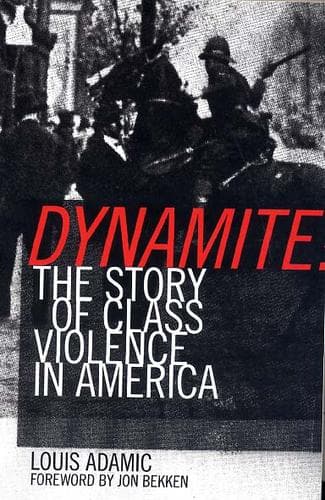
Labour disputes have produced more violence over a longer period in the US than any other industrialised nation in the world. From 1890 to 1930, hardly a year passed without a serious - and often deadly - clash between workers and management. Written in the 1930s and with a new introduction by Mike Davis, DYNAMITE recounts a fascinating and largely forgotten history of class and labour struggle in America's industrial beginnings.
Amelia Horgan
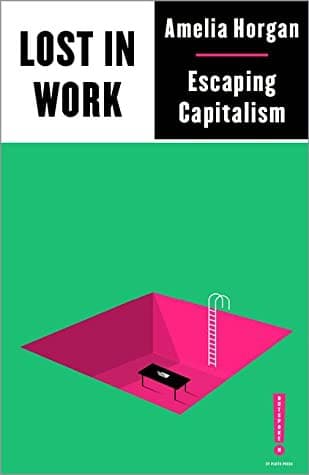
For a new generation of workers dealing with Covid-19, work from home, hybrid work, burnout, anxiety, and more, author Amelia Hogan offers a clear-eyed look at the work we do and suggests that in a new work in which work as we know it has changed dramatically, "we might think that something needs to change." Maybe change begins with reading this remarkable expose.
Gaston Leval
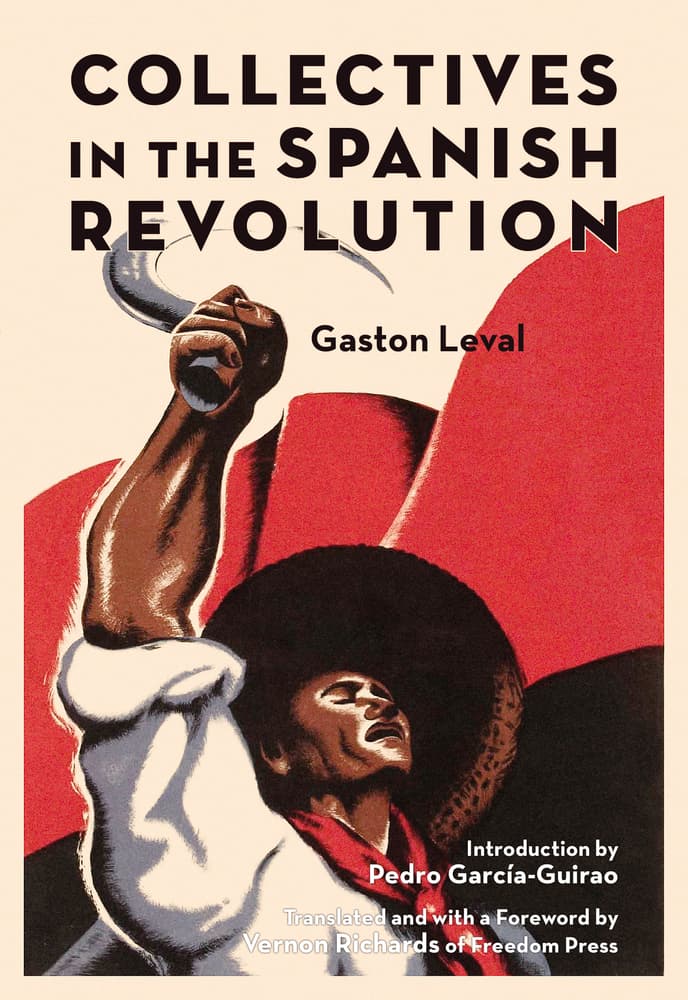
Gaston Leval's study brings together two aspects that are generally difficult to unite--analysis and testimony. He visited the towns and villages of revolutionary Spain where people had opted to live a libertarian communist lifestyle almost without precedent in history, collectivizing the land, factories, and social services. Collectives in the Spanish Revolution demonstrates clearly that the working class are perfectly capable of running farms, factories, workshops, and health and public services without bosses or managers. It proves that anarchist methods of organizing, with decisions made from the bottom up, can work effectively in large-scale industry, involving the coordination of many thousands of workers in many hundreds of places of work across numerous cities and towns, as well as broad rural areas. Leval's history of anarchy in action also gives insight into the creative and constructive power of ordinary people. The Spanish working class not only kept production going throughout the war, but in many cases managed to achieve increases in output. They improved working conditions and created new techniques. They created, out of nothing, an arms industry without which the war against fascism could not have been fought. The revolution also showed that without the competition bred by capitalism, industry can be run in a much more rational manner. Finally it demonstrated how an organized working class has the power to transform society.
Kieran Allen & Brian O'Boyle
Ireland has been marketed as the poster boy of EU austerity. EU elites and neoliberal commentators claim that the country's ability to suffer economic pain will attract investors and generate a recovery. In Austerity Ireland, Kieran Allen challenges this official narrative and argues that the Irish state's response to the crash has primarily been designed to protect economic privilege. The resulting austerity has been a failure and is likely to produce a decade of hardship. The book offers a deeply informed diagnosis of Ireland's current socio-economic and political malaise, suggesting that a political earthquake is underway which may benefit the left. Austerity Ireland is essential reading for students of Irish politics and economics, as well as those interested in the politics of austerity and the eurozone crisis.
Joanna Brenner
Drawing on explorations of the labour movement and working-class politics, Brenner provides a materialist approach to one of the most important issues of feminist theory today: ethnicity, the intersection of race, nationality, gender, sexuality and class.
Ndongo S. Sylla
The Fair Trade Scandal takes aim at an a consumer movement which many assume to be entirely benign. Through a razor-sharp analysis based on insider knowledge, Ndongo Sylla shows that there is a big gap between the rhetoric of fair trade and its practical results. Sylla shows empirically that Fair Trade excludes those who need it the most and that its benefits are essentially captured by the wealthiest groups in the supply chain. Based on his experience of working for Fairtrade International Sylla shows the flaws in the Fair Trade system which compromise its ethical mission. The Fair Trade Scandal is both a provocative and deeply informative exploration of the Fair Trade phenomenon, suitable for specialists and non-specialists alike.
Rhona Michie, Andrew Feinstein & Paul Rogers
'Equips readers with the information they need to resist the lies that feed humanity's urge to commit suicide. Read it!' Yanis Varoufakis 'Devastating testimony. Faultless research. It's impossible to exaggerate the timeliness of this powerfully written book' Peter Oborne We are seeing injustices caused by war and occupation unfold in real-time via social media, and we are speaking out in our millions against these horrors. Yet, from Gaza to Ukraine, the bombs continue to fall. We must understand why this is happening if we are to end it. Monstrous Anger of the Guns lays bare the dark and deceitful world of the global arms trade, which, often funded in our name, is a business that counts its profits in billions and its losses in human lives. Leading activists and campaigners connect the dots, showing how notions of citizenship, democracy and trust in governments are misguided, and how we can fight back by building mass movements, using direct action and legal justice to end the flow of weapons and the environmental and human devastation they bring.
Paul Hampton
A gripping exposé of the 2017 Grenfell Tower disaster and the systemic failures that led to Britain's worst residential fire since WWII
Corporate Watch
Capitalism thrives on crisis, and the multiple global environmental crises, including climate change and habitat and biodiversity loss, are creating new markets from which to generate profit. Those promoting green capitalism argue that if nature was valued correctly it will not only be protected, but even enhanced, along with the health of the economy and well-being in society. However, it is a contradiction in terms. Capitalism is fundamentally exploitative of people and the natural world, it is not and cannot be "green." Green capitalism involves various institutions, including governments, corporations, think tanks, charities and NGOs, implementing policies, practices and processes to incorporate nature into capitalist market systems. It takes the same capitalist ideas and values that create environmental crises--i.e. continual economic growth, private property, profit and 'free' markets--and applies them to the natural world as a way to solve those crises. It serves to maintain capitalism's dominance, both through finding new ways to generate profit, and as a way of protecting it from criticism of being environmentally destructive. This guide is intended as an introduction to the ideas surrounding green capitalism as well as the alternatives to it. We hope it will support attempts to resist the threat of green capitalism and create space for real ecological alternatives.
Jake Alimahomed-Wilson & Ellen Reese (eds)
Amazon's ubiquity is finally covered within one book - and in it lies the answers on how to take on this new, terrifying form of capitalism
Ralph Darlington
Traces the entwined international legacy of revolutionary syndicalism and the communist movement. --From publisher description.