Back to Subjects

Biography & Autobiography

17 books available

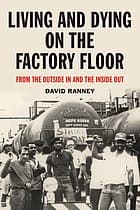
Living And Dying On The Factory Floor. From the Outside In and the Inside Out
Low Stock (1 left)

Living And Dying On The Factory Floor. From the Outside In and the Inside Out

David Ranney

David Ranney's vivid memoir describes his work experiences between 1976 and 1982 in the factories of southeast Chicago and northwest Indiana. The book opens with a detailed description of what it was like to live and work in one of the heaviest industrial concentrations in the world. The author takes the reader on a walk through the heart of the South Side of Chicago, observing the noise, heavy traffic, the 24-hour restaurants and bars, the rich diversity of people on the streets at all hours of the day and night, and the smell of the highly polluted air. Factory life includes stints at a machine shop, a shortening factory, a railroad car factory, a structural steel shop, a box factory, a chemical plant, and a paper cup factory. Along the way there is a wildcat strike, an immigration raid, shop-floor actions protesting supervisor abuses, serious injuries, a failed effort to unionize, and a murder. Ranney's emphasis is on race and class relations, working conditions, environmental issues, and broader social issues in the 1970s that impacted the shop floor. Forty years later, the narrator returns to Chicago's South Side to reveal what happened to the communities, buildings, and the companies that had inhabited them. Living and Dying on the Factory Floor concludes with discussions on the nature of work; racism, race, and class; the use of immigration policy for social control; and our ability to create a just society.

£13.99Member: £0.00
To Rob a Bank is an Honor. Lucio Urtubia
Low Stock (4 left)

To Rob a Bank is an Honor. Lucio Urtubia

Paul Sharkey (trans)

For the first time in English, the life story of the revolutionary outlaw who brought Citibank to its knees. In 1981, Lucio Urtubia received a suitcase full of cash from Citibank executives, handed over the plates he'd used to forge 20 million dollars in traveler's checks, and walked away a free man. This is the true story of the most famous Robin Hood of the twentieth century, a lifelong anarchist who robbed from the rich to give to liberation struggles the world round. Born to a poor family in the Basque Country, Urtubia was conscripted into Franco's army at seventeen, where he began smuggling rations from military stores. In 1954, he fled to exile in Paris, where he learned to work as a mason, laying bricks by day and collaborating with Catalonian anarchists by night. Soon, he was planning bank heists to fund the Spanish struggle, stealing weapons, and masterminding the escape of resistance fighters. Following the uprisings of May 1968, Urtubia opened a printshop, producing political pamphlets while amassing a crew of operatives to counterfeit passports, ID cards, and workers' paychecks. By the late 70s, Urtubia hit on the plan that would make him infamous: changing the serial numbers on traveler's checks and depositing them simultaneously. Citibank's early global banking system offered the prime target, and checks spread to revolutionary movements in Europe, Latin America, and the United States. "He who robs a thief is a thousand times forgiven," Urtubia argued. Over decades, Urtubia funneled material support to groups including the Red Brigades in Italy, the Baader-Meinhof group in Germany, the Black Panthers in the US, and the ETA Basque separatists. Told with Urtubia's characteristic warmth and humor, To Rob a Bank Is an Honor collects the adventures and political convictions of this larger-than-life figure of an incendiary era.

£18.00Member: £0.00
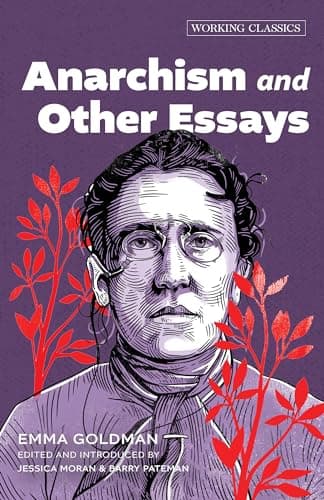
Anarchism and Other Essays
Low Stock (1 left)

Anarchism and Other Essays

Emma Goldman

A true classic of radical literature, in its first scholarly, annotated edition. Emma Goldman, the "notorious anarchist" deported from the United States in 1919 for "seditious activities," was a leading figure of American anarchism for almost thirty years. She continued to write and speak on anarchism for the rest of her life in exile, first in Soviet Russia and then in Europe--including Spain during the Spanish Revolution--and, finally, Canada. Goldman played a pivotal role in the development of anarchism in America and Europe in the first half of the twentieth century. This collection, first published in 1910 by her press, Mother Earth Publishing Association, illustrates her wide-reaching mind and ability to bring together strands of American and European individualism, anarchist communism, and early feminist thinking to develop a body of work that continues to influence the theory and practice of anarchism today. Essays include "Anarchism: What It Really Stands For," "The Psychology of Political Violence," "Prisons: A Social Crime and Failure," "The Hypocrisy of Puritanism," "The Tragedy of Woman's Emancipation," and "Marriage and Love," among others. A new introduction by Moran and Pateman situates Goldman's thinking in the movement of her day but also makes clear why her essays are still vital. Annotations throughout bring to light individuals and events that enrich our understanding of Goldman's writings. The Working Classics Series revives lineages of radical thought from the history of the anarchist movement.

£14.00Member: £0.00