18 books available
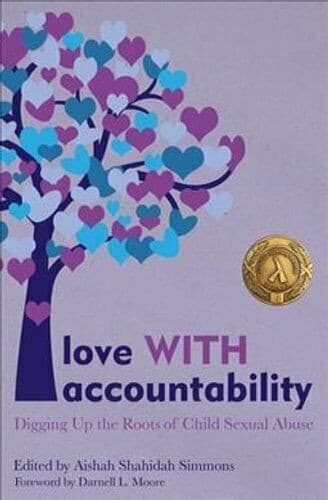
Aishah Shahidah Simmons (ed)
It's time to prioritize child sexual abuse and healing through the lens of social justice and the experiences of Black survivors and advocates.
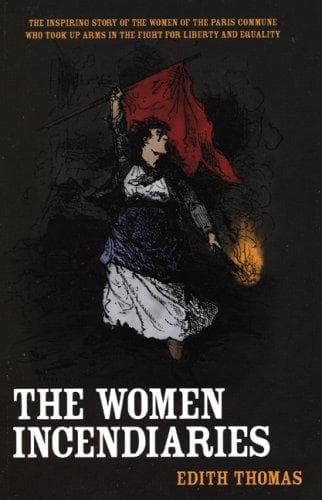
Edith Thomas
The long out-of-print classic about women in the Paris Commune of 1871.
Houzan Mahmoud (ed)
From all four parts of Kurdistan and across the diaspora, Kurdish women from different geographical, political and educational backgrounds pick up a pen, reflect and remember. Going beyond exoticising stereotypes and patriarchal representations, Kurdish Women's Stories gives twenty-four women authorial freedom to write about their own lived experiences. With contributors ranging from 20 to 70 years of age, we hear stories of imprisonment, exile, disappearances of loved ones, gender-based violence, uprisings, feminist activism and armed resistance, including first-hand accounts of political moments from the 1960s to today. Conceived as part of Culture Project's self-writing program, this book is essential reading for anyone who wants to better understand the struggle of Kurdish women through their own words.
Sophie Lewis
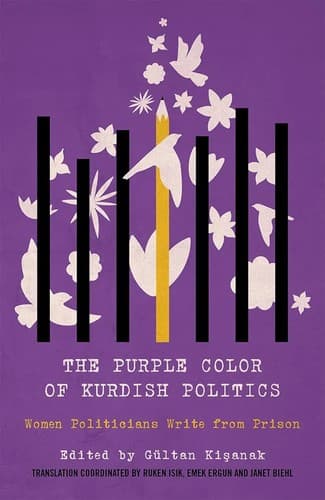
Gultan Kisanak
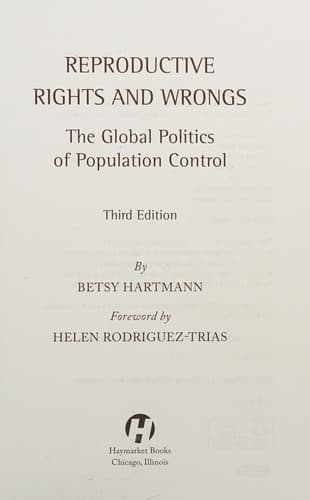
Betsy Hartmann
With a new prologue by the author, this feminist classic is an important gateway into the controversial topic of population for students, activists, researchers and policymakers. It challenges the myth of overpopulation, uncovering the deeper roots of poverty, environmental degradation and gender inequalities. With vivid case studies, it explores how population control programs came to be promoted by powerful governments, foundations and international agencies as an instrument of Cold War development and security policy. Mainly targeting poor women, these programs were designed to drive down birth rates as rapidly and cheaply as possible, with coercion often a matter of course. In the war on population growth, birth control was deployed as a weapon, rather than as a tool of reproductive choice. Threaded throughout Reproductive Rights and Wrongs is the story of how international women's health activists fought to reform population control and promote a new agenda of sexual and reproductive health and rights for all people. While their efforts bore fruit, many obstacles remain. On one side is the anti-choice movement that wants to deny women access not only to abortion, but to most methods of contraception. On the other is a resurgent, well-funded population control lobby that often obscures its motives with the language of women's empowerment. Despite declining birth rates worldwide - average global family size is now 2.5 children - overpopulation alarm is on the rise, tied now to the threats of climate change and terrorism. Reproductive Rights and Wrongs helps readers understand how these contemporary developments are rooted in the longer history and politics of population control. In the pages of this book a new generation of readers will find knowledge, argumentation and inspiration that will help in ongoing struggles to achieve reproductive rights and social, environmental and gender justice.
Raya Dunayevskaya
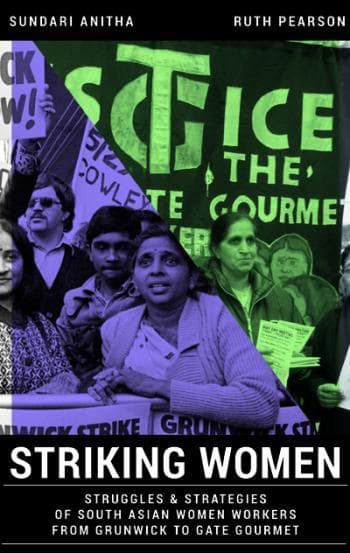
Sundari Anitha & Ruth Pearson
Keeanga-Yamahtta Taylor (ed)
"In the last several years, Black feminism has reemerged as the analytical framework for the activist response to the oppression of trans women of color, the fight for reproductive rights, and, of course, the movement against police abuse and violence. The most visible organizations and activists connected to the Black Lives Matter movement speak openly about how Black feminism shapes their politics and strategies today. The interviews I have compiled in this book -- with the three authors of the Combahee River Collective Statement, Barbara Smith, Beverly Smith, and Demita Frazier, #BlackLivesMatter cofounder Alicia Garza, and historian and activist Barbara Ransby -- are an attempt to show how these politics remain historically vibrant and relevant to the struggles of today. As Demita Frazier says, the point of talking about Combahee is not to be nostalgic; rather, we talk about it because Black women are still not free." --
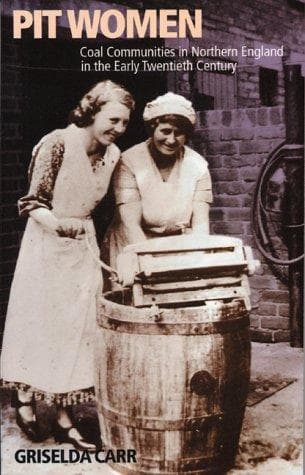
Griselda Carr
Combining her experience of living in a mining village for two decades with her training in social studies, Carr describe how women were an integral part of the mining industry from 1900 to the nationalization of the mines in 1947. Her original goal was to find the foundations of the strength women demonstrated during the strike of 1984-85. Distributed by Paul & Co. Publishers Consortium. Annotation copyrighted by Book News, Inc., Portland, OR
Chandra Talpade Mohanty & Linda E. Carty
Started as a digital archive project, Feminist Freedom Warriors tells the stories of women of colour from the Global South, weaving together cross-generational histories of feminist activism across national borders. These engaging interviews with sister comrades such as Angela Davis, Margo Okazawa-Rey, Himani Bannerji, and more will inform, inspire, and activate the imagination to explore what a just world might look like. The book features interviews with activists from movements spanning the last seven decades in the United States, India, Mexico, Palestine, Nigeria, South Africa, and beyond.
Nora Samaran
Nurturance culture is the inverse of abuse and patriarchy; its practice could be answer to systemic violence and oppression.
Sheila Rowbotham
This classic book provides a historical overview of feminist strands among the modern revolutionary movements of Russia, China and the Third World. Sheila Rowbotham shows how women rose against the dual challenges of an unjust state system and social-sexual prejudice. Women, Resistance and Revolution is an invaluable historical study, as well as a trove of anecdote and example fit to inspire today’s generation of feminist thinkers and activists.
Dilar Dirik
The Kurdish women's movement is at the heart of the most exciting revolutionary experiment in the world today: Rojava. Forged over decades of struggle, most recently in the fight against ISIS, Rojava embodies a radical commitment to ecology, democracy and gender equality. But while striking images of Kurdish women in desert fatigues proliferate, a true understanding of the women's movement remains elusive.Taking apart the superficial and Orientalist frameworks that dominate, Dilar Dirik offers instead an empirically rich account of the women's movement in Kurdistan. Drawing on original research and ethnographic fieldwork, she surveys the movement's historical origins, ideological evolution, and political practice over the past forty years. Going beyond abstract ideas, Dirik locates the movement's culture and ideology in its concrete work for women's liberation and radical democracy.Taking the reader from the guerrilla mountains to radical women's academies and self-organised refugee camps, the book invites women around the world to engage with the revolution in Kurdistan, both theoretically and practically, as a vital touchstone in the wider struggle for a militant anti-fascist, anti-capitalist feminist internationalism.
Angela Davis, Gina Dent, Erica R. Meiners & Beth E. Richie
An urgent, vital contribution to the indivisible projects of abolition and feminism from leading scholar-activists Angela Y. Davis, Gina Dent, Erica Meiners, and Beth E. Richie.
Joanna Brenner
Drawing on explorations of the labour movement and working-class politics, Brenner provides a materialist approach to one of the most important issues of feminist theory today: ethnicity, the intersection of race, nationality, gender, sexuality and class.
Alisa Bierria, Jakeya Caruthers & Brooke Lober (eds)
A collection of radical reconsiderations and creative critiques that aims to expose, disrupt, and uproot carcerality.
Abolition Feminisms: Organizing, Survival, and Transformative Practice, offers wide-ranging feminist abolitionist methods for liberation forged in collectivity, radical care, and transformation.